
بِسْمِ اللهِ الرَّحْمٰنِ الرَّحِيْمِ
It is generally advised that one should not remember or recall one’s past good deeds, so that one remains humble and does not get afflicted with conceit, boastfulness, arrogance, or the temptation of wasting one’s past good deeds by mentioning them, or reminding others of them.
The same applies to letting go of past incidents and “forgetting” them, in order to “move on”. In general, people advise us that we should not hold on to the past, live in the “here and now”, and plan ahead.
Well, all of that advice would hold weight for someone like me, if it were corroborated wholly by the two sources from which I choose to draw inspiration for myself – the Qur’an and ahadith.
The Qur’an and Prophetic narrations (ahadith) repeatedly exhort that one should not just keep revisiting their own past, to remember how Allah blessed and favored them, or rescued and saved them from unpleasant circumstances, but that one should also keep revisiting the history of mankind in general, by looking at the past life events of others, to take lesson from what Allah did to bygone peoples.
In fact, Allah encourages us in the Qur’an to even travel (سِيرُوا) through His earth and take note of how He dealt with the nations and peoples who lived therein, hundreds if not thousands of years ago.
This confirms that one should not just keep revisiting the past, but that one should also analyze and dwell on past events with the specific intention of gleaning eye-opening and thought-provoking lessons from them.
In lieu of this, many years ago, I had blogged about a few ahadith that mentioned the actions of Prophet Muhammad ﷺ and some of his companions, drawing lessons from them for us living in the modern age. In the post below, I intend to do the same with another sahih hadith, which mentions a calamitous event that occurred in the lives of 3 men, because of which sure death stared them in the face.
However, before I go on, I want to specify that this hadith can be found in the form of 4 different versions of Prophetic narrations, under 4 separate headings.
These can be accessed by clicking or tapping on the 4 links below:
- Riyad us Saliheen كتاب المقدمات
- Sahih al-Bukhari كتاب الإجارة
- Sahih al-Bukhari كتاب البيوع
- Sahih al-Bukhari كتاب أحاديث الأنبياء
Each version of this hadith among the 4 listed above, is different from the other 3, and mentions some details that the others do not. The order of mention in them, of the life events narrated by the 3 men, also differs.
I have chosen the hadith that mentions the greatest number of (smaller) details of the 3 personal-life-event stories narrated by the 3 men (who are the main ‘protagonists’ of these ‘stories’, really) in order to shed more light upon the lessons that we can draw from them: the second hadith listed above, which is quoted by Imam Bukhari in كتاب الإجارة, or “The Book of Hiring”.
But before I go on, please pause for a moment to take a good look at the 2 images below:

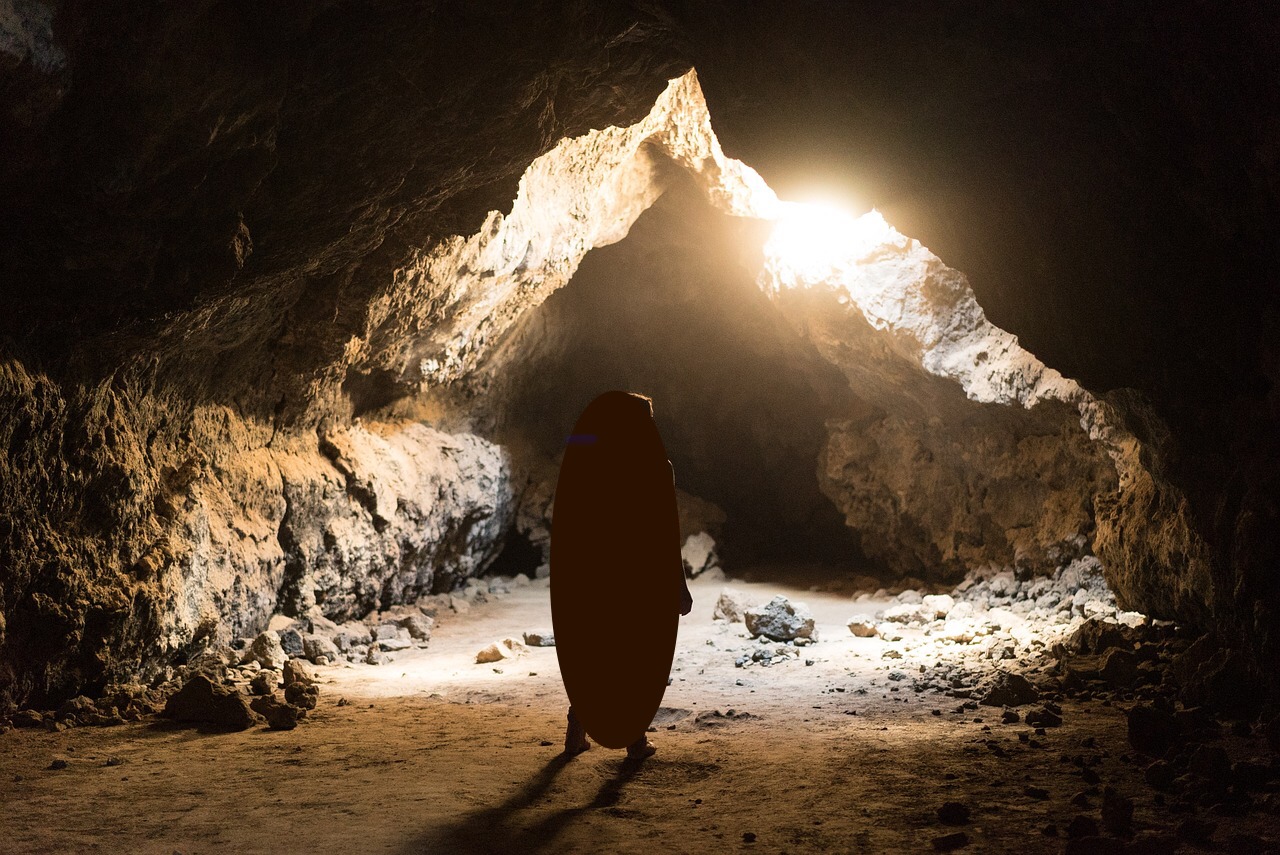
As you can see, being inside a cave can be a spell-binding, majestic and awe-striking experience.
Nevertheless, imagine how the above person would feel if that hole suddenly got closed up by a huge falling boulder, and they were trapped inside.
Scary prospect, isn’t it? Even for a seasoned hitchhiker or mountaineer, this scenario would be something to dread. Yet, this is what happened to the 3 men, all of whom hailed from the same tribe, – they got trapped inside a cave in which they had sought shelter at night, by a falling stone rock.
They knew that sure death awaited them, and that no power except Allah could remove this calamity from them, because which person from among Allah’s creation would be able to hear them out there in the wilderness, even if they all shouted for help in unison from behind that gigantic rock? Without food and water, they would not survive for long inside a blocked cave.
So the 3 of them decided to call upon Allah to move the rock away from the entrance to the cave, using a past good deed that each one of them had done solely for the pleasure of Allah (…. and not for any other reason), to call upon Allah and invoke His mercy and aide.
Points to note:
- Each man’s story involves another person (or 2 people) i.e. it is about their personal relationship with someone else.
- The event that each man narrates involves his giving something tangible to that other person (or 2 people).
- Each story is about the man letting go of something (only for the sake of Allah) by sacrificing it for that other person, even though he could easily have chosen to keep/use/consume/benefit from it himself, because he already had it in his hand (figuratively speaking).
- I have taken help in checking the translation of the hadith below using Lane’s Lexicon, going into the depth of the meanings of many if its key/important words. No AI translators were used.
The narration begins
انْطَلَقَ ثَلاَثَةُ رَهْطٍ مِمَّنْ كَانَ قَبْلَكُمْ حَتَّى أَوَوُا الْمَبِيتَ إِلَى غَارٍ فَدَخَلُوهُ، فَانْحَدَرَتْ صَخْرَةٌ مِنَ الْجَبَلِ فَسَدَّتْ عَلَيْهِمُ الْغَارَ فَقَالُوا إِنَّهُ لاَ يُنْجِيكُمْ مِنْ هَذِهِ الصَّخْرَةِ إِلاَّ أَنْ تَدْعُوا اللَّهَ بِصَالِحِ أَعْمَالِكُمْ
Three tribesmen from among those who were before you, set out together till they reached a cave at night and entered it. A big rock rolled down the mountain and closed the mouth of the cave. They said (to each other), “Nothing will save you from this rock except if you invoke Allah by giving reference to a righteous deed that you did (for Allah’s sake only).”
The Arabic رَهْطٍ word means a man’s people or tribe numbering less than 10, who are all male, consisting of his nearer relatives. The same word occurs in the Qur’an (in verses 11:91 and 11:92) to refer to the close male relatives of Prophet Shu’aib [عليه السلام].
The word صَخْرَةٌ means a rock, or a great mass of hard stone, and it also occurs in Surah Al-Kahf (in the verse 18:63) in the story of Prophet Musa [عليه السلام] and the fish.
Once trapped inside the cave at night by the falling mass of hard stone, the three men who hailed from the same tribe knew that sure death awaited them, unless Allah moved the صَخْرَةٌ away from the mouth of the cave.
So they began to pray.
The son who got delayed
فَقَالَ رَجُلٌ مِنْهُمُ اللَّهُمَّ كَانَ لِي أَبَوَانِ شَيْخَانِ كَبِيرَانِ، وَكُنْتُ لاَ أَغْبِقُ قَبْلَهُمَا أَهْلاً وَلاَ مَالاً، فَنَأَى بِي فِي طَلَبِ شَىْءٍ يَوْمًا، فَلَمْ أُرِحْ عَلَيْهِمَا حَتَّى نَامَا، فَحَلَبْتُ لَهُمَا غَبُوقَهُمَا فَوَجَدْتُهُمَا نَائِمَيْنِ وَكَرِهْتُ أَنْ أَغْبِقَ قَبْلَهُمَا أَهْلاً أَوْ مَالاً، فَلَبِثْتُ وَالْقَدَحُ عَلَى يَدَىَّ أَنْتَظِرُ اسْتِيقَاظَهُمَا حَتَّى بَرَقَ الْفَجْرُ، فَاسْتَيْقَظَا فَشَرِبَا غَبُوقَهُمَا، اللَّهُمَّ إِنْ كُنْتُ فَعَلْتُ ذَلِكَ ابْتِغَاءَ وَجْهِكَ فَفَرِّجْ عَنَّا مَا نَحْنُ فِيهِ مِنْ هَذِهِ الصَّخْرَةِ. فَانْفَرَجَتْ شَيْئًا لاَ يَسْتَطِيعُونَ الْخُرُوجَ
So, one of the men said, “O Allah! I had elderly parents and I never provided my family and my cattle with night-milk before them. One day, the search for something delayed my return, and I came late (at night) after they had gone to sleep. I milked the sheep for them and took the night-milk to them, but I found them sleeping. I disliked to give night-milk to my family and my animals before both of them. Therefore, I stayed there with the bowl of milk in my hand, waiting for them to wake up till the day dawned. Then they got up and drank the milk. O Allah! If I did that seeking only Your countenance, please relieve us from our current situation caused by this rock.”
So, the rock shifted a little … but they could not get out.
***
In order to fully understand the righteous deed that the first man mentioned in his supplication to Allah, one must ponder on the meaning of the Arabic word غَبُوق, which means, “evening drink”.
The root of this word, غبّق, means that a man gave his cattle (i.e. his camels, cows, or goats etc.) water to drink at night, or instead, that he milked them at night. Both meanings can be implied when this word is used.
In either case, whether milking animals or giving them water to drink, this word implies that this (watering or milking) action was done after sundown i.e. at night. Those readers who are able to read and understand Urdu, can tap here to get a comparative pictorial breakdown of this Arabic word, presented in the form of a table.
In English (language and culture), the slang word ‘nightcap’ carries a meaning similar in concept to the Arabic word غَبُوق that this hadith mentions, viz. a soothing and calming warm drink that is consumed just before going to bed at night.
Either way, since the elderly become a lot like little children as they age, giving them a night-drink of warm milk just before putting them to bed, especially that which has just been freshly extracted from an animal’s udder, ensures that they will enjoy a good night’s sleep. It is also nutritious.
This cattle-herder son disliked giving his family (i.e. his wife and children) or his cattle-herds their غَبُوق (night-time-drink) before giving this drink to his elderly parents (وَكَرِهْتُ أَنْ أَغْبِقَ قَبْلَهُمَا أَهْلاً أَوْ مَالاً). This was a righteous duty that he had obligated upon himself as a nightly ritual. That day, however, he was called away to search for something (فِي طَلَبِ شَىْءٍ) which delayed his return home, and by the time he got back, his elderly parents had gone to sleep without consuming that night’s غَبُوق.
Nevertheless, not giving up, he went out anyway and milked his animals as usual, and brought his sleeping parents their غَبُوق as he always did in a vessel (قَدَحُ), but he did not wake them up. Instead, he kept standing there waiting for them, holding the قَدَحُ full of fresh milk in his hands, to move in their sleep or to wake up on their own, so that he could give them the fresh milk to drink.
He spent the night in this state … until dawn broke, when his parents woke up of their own accord, took the milk from him, and drank it.
Points to note:
- His parents did not know that he had been standing there the whole night, therefore adding to the purity of his intention for doing this good deed. That is, he did not do this righteous deed to show off to them or to anyone else that he was ‘such a good son’, because no one was watching, or knew of it (except perhaps the small children who were near his feet – والصبية يتضاغون عند قدمى and وَالصِّبِيْةُ يَتَضَاغَوْنَ عِنْدَ رِجْلَىَّ – as other versions of this hadith mention).
- The other versions of this hadith state that his wife and young children were ‘clamoring’ (crying out, making noises) for the milk due to hunger (وَأَهْلِي وَعِيَالِي يَتَضَاغَوْنَ مِنَ الْجُوعِ), implying that drinking their share of the غَبُوق would have put them all to sleep. However, he did not give them their غَبُوق before his elderly parents had had it, as this was a righteous deed that he had obligated upon himself every night i.e. to start with his parents first when serving the غَبُوق to all those (humans and animals) who were under his care. As it is, any parent who has little children will readily acknowledge the fact that when any fresh food, primarily warm milk, is brought in front of small children who are very hungry, it is pounced upon with relish and can finish quickly in its entirety. In contrast, the elderly are much slower in consuming their food at night, and they can get full with little. This was probably one of the reasons why this cattle-herder son did not give the freshly-extracted milk every night to anyone at home under his care before he had given it to his elderly parents; – to ensure that they had calmly drunk their fill before the younger ones at home (and farm animals) got their hands on it and finished it off.
- To sum up the core of the conflict that was raging inside him: neither did he want to wake up his elderly parents by disturbing their sleep, nor did he want to give anyone else in his home the warm fresh milk that night before his parents had drunk it. He kept enduring this inner turmoil by standing near his sleeping parents with the vessel of milk in his hands, until dawn broke.
- Some scholars have extracted an opinion from this hadith that an adult, financially able son should always provide food to his elderly parents before feeding his wife, children and other dependents, even if the latter have to go hungry because of this. Many poor Muslim men, therefore, who earn enough just to feed themselves and their parents, allow their wife and children to go hungry (or to be fed via charity, by someone else, on a permanent basis). This ideology is especially prevalent among those Muslim brothers who work with the tableeghi jamaat, – this group encourages if not outright dictates its male members to
dumpleave their wife and children (to be fed on others’ charity), to go out for months’ long tableeghi missions, citing the example of Prophet Ibrahim leaving our mother Hajrah and his baby son Ismael [عَلَيهِمَا السَّلَام] alone in the desert (without provisions), as so-called ‘proof’ of this action from the Shari’ah. All of these deductions are incorrect, because the issue in this hadith was a vessel of night-milk, not the basic Shar’i duty of the provision of daily food, shelter, and livelihood. The wife and children of the man in this hadith lived with him as their provider, which is proved by what he mentions of his little children ‘being near his feet’. Secondly, this hadith mentions his parents as being “شَيْخَانِ كَبِيرَانِ”, the same 2 words that occur in the Qur’an, to (1) quote the (eventual) wife of Prophet Musa and her sister in verse [28:23], when they described their elderly father at the spot at which they were herding their animals for availing drinking water, and to (2) quote the brothers of Prophet Yusuf when they described their elderly father, Prophet Yaqoub, in verse [12:78]. The words “شَيْخٌ كَبِيرٌ” mean, an elderly person who is unable to take care of themselves, financially or physically. One of these words is also used to quote our mother Sarah, the wife of Prophet Ibrahim, when she describes her husband Prophet Ibrahim as “شَيْخًا” in verse [11:72]. When parents reach such a stage, then it is obligatory for their adult son to take care of them the way the man mentioned in this hadith was doing (in addition to providing for his wife and children). For parents who are younger, financially stable, and physically strong, there is no such obligation on their son, but he may earn extra rewards via supererogatory good deeds (اِحسَان) by serving them and helping them in anyway, nevertheless. - Many people who explain the good deed of the son in this hadith focus only on his giving his parents the milk, and completely miss the main point, which underscores his righteous deed. That main point is: – فَكَرِهْتُ أَنْ أُوقِظَهُمَا – that he disliked disturbing his elderly parents’ night sleep. That was his main good deed. He could have just woken them up to give them the milk, but he did not. He stood there, waiting for them to wake up themselves, holding their milk, until dawn broke. That is the main takeaway from this hadith for any adult offspring of elderly parents, today – do not disturb them when they are sleeping, resting, or napping, even for something important, such as giving them food or medicine, and do not allow your young children to disturb them, either. Once your elderly parents have fallen asleep, do everything that you can to ensure that they continue to peacefully sleep. And Allah knows best.
The Prophet ﷺ said that after the first man of the tribe from among the 3 men who were trapped inside the cave mentioned his good deed to supplement his supplication, the stone rock at the entrance of the cave moved a little, but not enough for one of them to be able to get out.
The second man from the tribe, then, began his supplication.
The besotted paramour who got jilted
اللَّهُمَّ كَانَتْ لِي بِنْتُ عَمٍّ كَانَتْ أَحَبَّ النَّاسِ إِلَىَّ، فَأَرَدْتُهَا عَنْ نَفْسِهَا، فَامْتَنَعَتْ مِنِّي حَتَّى أَلَمَّتْ بِهَا سَنَةٌ مِنَ السِّنِينَ، فَجَاءَتْنِي فَأَعْطَيْتُهَا عِشْرِينَ وَمِائَةَ دِينَارٍ عَلَى أَنْ تُخَلِّيَ بَيْنِي وَبَيْنَ نَفْسِهَا، فَفَعَلَتْ حَتَّى إِذَا قَدَرْتُ عَلَيْهَا قَالَتْ لاَ أُحِلُّ لَكَ أَنْ تَفُضَّ الْخَاتَمَ إِلاَّ بِحَقِّهِ. فَتَحَرَّجْتُ مِنَ الْوُقُوعِ عَلَيْهَا، فَانْصَرَفْتُ عَنْهَا وَهْىَ أَحَبُّ النَّاسِ إِلَىَّ وَتَرَكْتُ الذَّهَبَ الَّذِي أَعْطَيْتُهَا، اللَّهُمَّ إِنْ كُنْتُ فَعَلْتُ ذَلِكَ ابْتِغَاءَ وَجْهِكَ فَافْرُجْ عَنَّا مَا نَحْنُ فِيهِ. فَانْفَرَجَتِ الصَّخْرَةُ، غَيْرَ أَنَّهُمْ لاَ يَسْتَطِيعُونَ الْخُرُوجَ مِنْهَا.
“O Allah! I had a cousin who was the dearest of all people to me and I desired her, but she kept evading me until she had a hard time in a famine year. So she came to me and I gave her one-hundred-and-twenty dinars, on the condition that she would meet me alone, and she agreed. When I was finally about to have my way with her, she said, ‘It is not lawful for you to take my chastity except by its legitimate due (i.e. marriage).’ So, I cringed from what I was about to do with her and I turned away from her, though she was the dearest of all the people to me, and also I left the gold that I had given her. O Allah! If I did that for Your sake only, please relieve us from the present calamity.”
So, the rock shifted a little more, but still they could not get out from there.
***
After looking up some of the Arabic words in the above part of this hadith in Lane’s Lexicon, I have made changes to the translation, in appropriation with their correct meanings.
The second man began his dua to Allah by mentioning how he desired the daughter of his paternal uncle (عَمٍّ) because he loved her more than any other person in the world. He pursued her and she became aware that he desired her, but she kept rejecting his advances (فَامْتَنَعَتْ مِنِّي) until she had to come and ask him for monetary help during a year of extreme hardship (recall that she was his paternal cousin i.e. a relative).
He agreed to give her 120 gold coins (dinars) but expressed his desire for her again. She agreed this time (فَفَعَلَتْ). However, just when he was about to deflower her (إِذَا قَدَرْتُ عَلَيْهَا), she (wisely) told him that what he was doing was not halal except through marriage (لاَ أُحِلُّ لَكَ أَنْ تَفُضَّ الْخَاتَمَ إِلاَّ بِحَقِّهِ).
What she said made him immediately cease his advances, and he retreated from the sin that he had been about to commit with her (فَتَحَرَّجْتُ مِنَ الْوُقُوعِ عَلَيْهَا). The word فَتَحَرَّجْتُ means to shun a sin or crime. He left her as a virgin despite having the power and permission, at that moment, to do as he desired with her, without taking back the 120 gold coins that he had given to her as charity (or as payment, whichever one had been his preponderant motive).
But here is the key point for us to note: – for him, the sin that he had been about to commit with her was not about enjoying the power that he had over her (as is the case with men who commit rape), but rather, it was instigated by his love for her, which he admitted in front of Allah again, whilst ending his supplication in the cave, by saying “فَانْصَرَفْتُ عَنْهَا وَهْىَ أَحَبُّ النَّاسِ إِلَىَّ” (“I turned away from her even though she was the most beloved of all people to me.”).
In essence, when Allah finally enabled him (as a test of his faith, no doubt) to have – all to himself, almost at his mercy, to do with as he pleased, the one person whom he loved the most on earth – he gave her up for the sake of Allah.
Points to note:
- Doing proactive good deeds is not the only way to gain love and nearness to Allah. Abstaining from a sin that is very easy to commit is also a way to earn the “وَجْه” i.e. countenance and pleasure of Allah. Many a time Allah tests us by putting us in situations in which it is easy for us to give in to temptation and commit a (major) sin, but He wants us to be strong in faith and to walk away from these situations.
- Cousins should observe hijab from each other, because this hadith provides clear proof that a man may feel such strong love, lust and desire for a woman who is his paternal cousin (and vice versa) that he may be incited to commit fornication with her, even if she rebuffs his advances. Take note.
- If a woman (especially one who is young) is going through hardship, non-mahrum men who have the money and/or clout to help her get out of her hardship should categorically abstain from exploiting her in any way, and from deliberately putting her into a compromising situation. They should fear Allah and just donate their money to her – solely for the sake of earning Allah’s pleasure, – expecting nothing in return from her (… ever!).
- When a woman, young or old, encounters financially hard times or poverty, it is a test from Allah – not just for her, but also for the people around her. When the girl in the above hadith conjured up the courage to speak out the blatant truth to her cousin at the exact key-moment of her compromising situation, she did a righteous deed, and a heroic act. Shout out to all those cowardly wives to take heed, who remain silent and allow their Muslim husbands to enjoy their bodies in an unlawful manner e.g. whilst both of them are in the state of obligatory Ramadan fasting, or the wife is not completely done with her menstruation period, or worse, if her husband wants to commit the act of the people of Prophet Lut [عليه السلام] with her, and she lets him do it. Shame on such wives for being cowardly and spineless, and not stopping their husbands! They should do what the girl in the above hadith did!
- This part of the hadith is also proof of the fact that a virile man who truly fears Allah can control himself (and his lust), even at the last minute, and he can walk away from the bed of a woman whom he loves more than everyone else in the world, for the right reasons (i.e. for the sake of Allah). The mind and heart have power over the body. This part of the hadith also disproves the concept of rape being the result of pure lust, as some men have claimed in the past. Historically, men would blame the victim of rape (the woman) for being in the wrong place at the wrong time, claiming that a man is unable to stop himself if a woman is available to him in privacy (especially after dark, all alone, where no one else is around). This hadith disproves that claim. A man can walk away from a woman – even the one whom he loves more than anyone else, who has agreed to let him be alone with her to get what he desires (تُخَلِّيَ بَيْنِي وَبَيْنَ نَفْسِهَا، فَفَعَلَتْ), and who is pure and untouched i.e. a virgin (تَفُضَّ الْخَاتَمَ – the word “خَاتَمَ” means seal, referring to the hymen). This hadith also disproves the concept of “marital” rape i.e. when any husband, Muslim or not, justifies the act of his forcing, coercing, manipulating, cornering, or blackmailing his wife into going to bed with him against her wishes, or when she is unwilling to (due to valid reasons), by claiming that he “is unable to control his desires”. If the man supplicating to Allah in this hadith could walk away from touching the woman whom he dearly loved, who was lying there, allowing him to have her – and do this only for the sake of Allah, – then so can any other man similarly walk away. And this will not make him any less of a man. Quite the opposite, actually.
After this second man culminated his supplication, the stone rock that was blocking the entrance of the cave (الصَّخْرَةُ) moved a little bit more, but the opening was still not big enough for any of the 3 men to pass through.
That is when the third man from the tribe commenced his supplication:
The herdsman who invested
اللَّهُمَّ إِنِّي اسْتَأْجَرْتُ أُجَرَاءَ فَأَعْطَيْتُهُمْ أَجْرَهُمْ، غَيْرَ رَجُلٍ وَاحِدٍ تَرَكَ الَّذِي لَهُ وَذَهَبَ فَثَمَّرْتُ أَجْرَهُ حَتَّى كَثُرَتْ مِنْهُ الأَمْوَالُ، فَجَاءَنِي بَعْدَ حِينٍ فَقَالَ يَا عَبْدَ اللَّهِ أَدِّ إِلَىَّ أَجْرِي. فَقُلْتُ لَهُ كُلُّ مَا تَرَى مِنْ أَجْرِكَ مِنَ الإِبِلِ وَالْبَقَرِ وَالْغَنَمِ وَالرَّقِيقِ. فَقَالَ يَا عَبْدَ اللَّهِ لاَ تَسْتَهْزِئْ بِي. فَقُلْتُ إِنِّي لاَ أَسْتَهْزِئُ بِكَ. فَأَخَذَهُ كُلَّهُ فَاسْتَاقَهُ فَلَمْ يَتْرُكْ مِنْهُ شَيْئًا، اللَّهُمَّ فَإِنْ كُنْتُ فَعَلْتُ ذَلِكَ ابْتِغَاءَ وَجْهِكَ فَافْرُجْ عَنَّا مَا نَحْنُ فِيهِ. فَانْفَرَجَتِ الصَّخْرَةُ فَخَرَجُوا يَمْشُونَ.
“O Allah! I employed laborers and I paid them their wages, with the exception of one man, who left his wages and went away. I invested his wages and I got much property thereby. Then, after some time, he came and said to me, ‘O Allah’s slave! Pay me my wages’. I said to him, ‘All the camels, cows, sheep and slaves you see, are yours’. He said, ‘O Allah’s slave! Don’t mock me’. I said, ‘I am not mocking you’. So, he took all the herds and drove them away and left nothing. O Allah! If I did that for Your sake only, please remove from us (the calamity) that we are in.”
So, that rock shifted completely and they got out, walking.
***
Hundreds of years ago, before paper money, industrialization and technology changed humankind’s livelihoods and lifestyles forever, wealth was measured and owned mostly in the form of coins (gold and silver), land, slaves, and animals.
The third man from the trapped trio was apparently a wealthy man who employed several laborers for work. One of his laborers left his company without taking along with him the wages that he had been paid for the work that he had finished doing. Whether he did this by mistake or on purpose, is not mentioned in the hadith.
The investing employer, apparently having an entrepreneurial mindset, did not save that laborer’s wages as they were, nor did he consume them unlawfully, but rather, he chose to invest that laborer’s wages into wealth.
This wealth was in the form of herds of 3 kinds of animals (camels, cows, and sheep) and slaves, – all of which grew over time (ostensibly by reproduction).
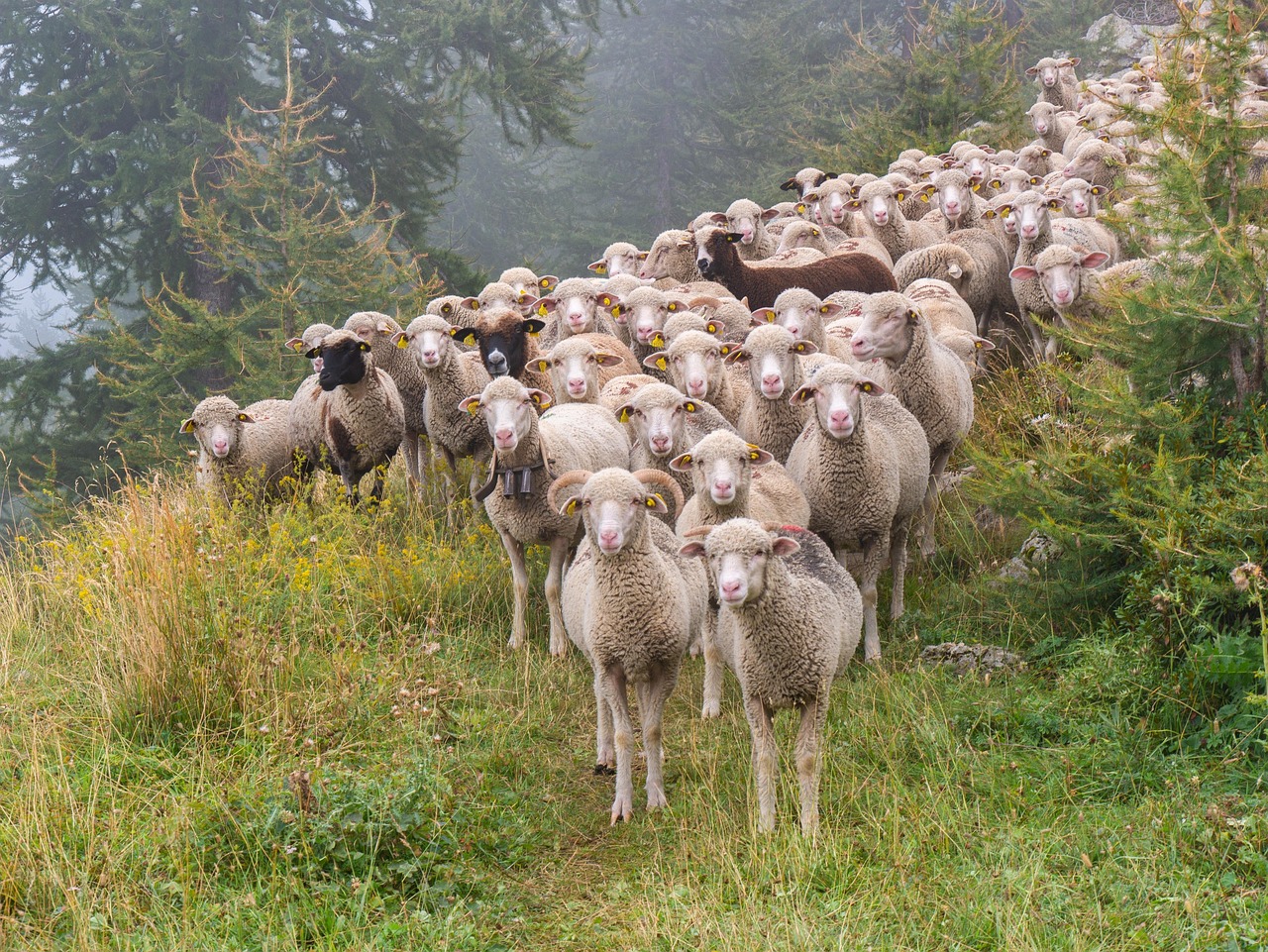
One day, the laborer who had left his wages behind, came back and demanded those wages.
Now, the stock-holding herdsman could have easily paid the laborer the former value of his wages i.e. the exact amount that he had earned for his work just before he had left in the past, without letting him know that he had invested those wages of his into livestock and slaves without his knowledge, which had grown into immense numbers.
But the herdsman chose not to be sly, cunning, greedy, miserly, selfish, and deceitful. Instead, he chose to reveal to his former employee that his wages had been invested into livestock and slaves, which had grown into large numbers. He then showed the laborer all of this wealth, and told him to take it all, as it was, rightfully, his.
The laborer was so dumbstruck by what he had been told and what he saw, that he thought that the herdsman was mocking him. On being told that this was, in fact, the bare truth, the laborer happily took away everything (i.e. the livestock and slaves) that was – rightfully – his.
This is a lesson for modern-day businessmen, shareholders, entrepreneurs, and investors. Do not eat up the fruits of the hard work of one of your employees, who worked in the past for your company/business with sincerity and good intentions, because of which your business began to boom and grow magnanimously. Do not take credit for your business’ profits that are the fruit of the hard work and labor of someone else i.e. one of the people working for you. Rather, give both, credit and monetary compensation, where and when it is due, to those under your employ, who rightfully earn and deserve it. You might be the person giving all the orders and making all the strategic decisions, but you will always remember that one employee who came into your struggling company when it was not established, and worked hard day and night to be able to make it reach new, historic, record-breaking heights. Always remember who that person was, and give them what you owe them, without holding back a single coin (or sheep!).
When the third man from the tribe ended his supplication, – asking Allah to remove the rock blocking the entrance to the cave, if Allah knew what he had done with his former laborer to be a sincere deed, just for the sake of Allah, – the stone rock that was blocking the entrance of the cave in which the 3 men were still trapped, finally moved enough for all of them to easily pass through it, out to their freedom …. and back to their lives.
Conclusion: some thoughts
If you look at it, this hadith encompasses the 3 stages of life in which any adult man can find himself. Let me break it down broadly into 2 decades for each stage (this is based merely on my personal reasoning and insight).
When men are younger (age 15 – 35), it is a girl whom they are madly in love with, and pursue with infatuated desire. When they are a bit older and married (age 30 – 50), having a wife and young children, with a demanding livelihood that keeps them away from home, working till the wee hours, and elderly parents to take care of, it is the work-family balance that they struggle to achieve. And finally, often later in life (age 55 onward), when they are older and so well off in their means of earning a living that they are able to employ many laborers to work for them, and they possess not just the wealth but also the wisdom from life experience to make fruitful and profitable investments with their wealth, it is the issue of what to do with any surplus wealth that becomes a recurrent concern.
Each man’s story in the above hadith, like I said at the beginning, involves giving something tangible to another person, and seemingly, not to receive anything (tangible or of value) in return for giving it.
The son gave a vessel full of fresh milk to his parents that he had milked directly from his animal through his own late-night efforts. The paramour gave the woman whom he loved more than anyone else 120 gold coins as charity to relieve her hardship. And the capitalist herdsman gave his former employee/laborer his past earned wages, burgeoned manifold by the added profits that investing those wages in livestock had garnered, so that they now existed in the form of animal herds of tremendous numbers.
These 3 narrated incidents indicate that giving up something to another – something that one can easily keep for oneself without facing any worldly consequences, – and doing this solely for Allah’s sake, is such a noble deed, that it can save us from sure death in an unexpected, crisis-like, calamitous situation that accidentally occurs to us later on in life.
Be it someone whom we loved when we were younger, or our dependents at home whom we support financially, or the employees who work for us, this hadith teaches us to fear Allah regarding what we do with these people, in private and in public.
Sincerity in dealing with people – sincerity of intention and deed – goes a long, long way, in saving our own hides later on, when we are left all alone, with no one besides Allah to save us from sure loss, suffering, harm, or death.
Discover more from Sadaf’s Space: From Blog to Books
Subscribe to get the latest posts sent to your email.

 Sadaf’s Space: From Blog to Books
Barak Allah feeki sister what an excellent thought provoking piece! May Allah accept from you and reward you. Ameen.
Wa iyakum. Aameen.
JazaakumAllahu khairan. It’s helpful to see the definitions of the words, and interesting to see the connections to modern day life. May Allah accept it. Ameen.
Wa iyakum. Arabic words of the Qur’an and ahadith fascinate me, and I love sharing my insights. May Allah grant us all the taufeeq to ponder upon His words and that of His Messenger ﷺ. Aameen.
Jazakamu Allahu khairan – may Allah reward you with immense goodness.
Aameen, wa iyakum.
Thank you for your efforts to narrate such a long hadith, meaningfully and with knowledge.
Giving and sharing is one of the most beloved duties loved by God AlMighty and He loves those who share His knowledge for the guidance of His creation.
Lots of Love and Prayers
You are welcome. May Allah accept from us. Aameen.