بِسْمِ ٱللهِ ٱلرَّحْمٰنِ ٱلرَّحِيْمِ
A short surah (chapter) of the Qur’an, numbering 67 in sequence from a total of 114.
30 verses. 1½ pages of the standard Arabic Qur’an mushaf.
A surah that is a protection for the Muslim in their transitional period of soul-without-body existence in the grave (known as “barzakh”).
A surah that conveys a deep, profound message from the Creator of humankind about their provision and livelihood.
Abu Hurairah رَضِيَ ٱللَهُ عَنْهُ reported, “I heard the Messenger of Allah ﷺ saying, “There is a surah in the Qur’an which contains thirty ayaat, which kept interceding for a man until he was forgiven. This surah is تَبَـٰرَكَ ٱلَّذِى بِيَدِهِ ٱلْمُلْكُ”.” [Al-Tirmidhi and Abu Dawud]
This surah is Surah Al-Mulk, which is situated at the beginning of the 29th juz of the Noble Qur’an. So let us now begin to ponder upon what Allah says to us in it.
Dominion Belongs to the Creator of Life
Surah Al-Mulk commences with proclaiming the greatness of Allah—how total dominion (the kingdom) is solely for Him, and how He is able to do anything and everything.
تَبَـٰرَكَ ٱلَّذِى بِيَدِهِ ٱلْمُلْكُ وَهُوَ عَلَىٰ كُلِّ شَىْءٍ قَدِيرٌ ١
ٱلَّذِى خَلَقَ ٱلْمَوْتَ وَٱلْحَيَوٰةَ لِيَبْلُوَكُمْ أَيُّكُمْ أَحْسَنُ عَمَلًا ۚ وَهُوَ ٱلْعَزِيزُ ٱلْغَفُورُ ٢
Blessed is the One in Whose Hands rests all authority and He is Most Capable of everything. He is the One Who created death and life, in order to test which of you is best in deeds.
And He is the Almighty, All-Forgiving. [1–2]
The word “al-Mulk” is no stranger to anyone who is familiar with Arabic (or Urdu). Malik, Maalik, milkiyat… these words denote ownership, possession, control, and authority. In Urdu, mulk means ‘country’.
According to Lane’s Lexicon, “مَلَكَهُ (means) He possessed it, or owned it, with the ability to have it to himself exclusively [and he exercised, or had, authority over it]. مُلْكٌ signifies the exercise of the authority to command and to forbid, in respect of the generality of a people.”
Next, it is interesting that Allah mentions death before life in the second verse of Surah Al-Mulk, when He speaks of what He created, even though death can only come once a life already exists. Nevertheless, the reason for mentioning death first must be based upon His infinite wisdom, because, logically speaking, life comes before death (in sequence). Allah says that He created death and (then) life, to test us (i.e. humankind) to see which one of us is the best (أَحْسَنُ) in deeds.
The word لِيَبْلُوَكُمْ has the same root as the word بَلَآءٌ, which means a test or trial:
“بَلَاهُ (noun. بَلَآءٌ) or the noun is بَلْوٌ, (means that) He (God) tried, proved, or tested, him, بِخَيْرٍ [by, or with, good], or بِشَّرٍ [by, or with, evil]; for God tries his servant (يَبْلُوهُ) by, or with, a benefit, to test his thankfulness; and by, or with, a calamity, to test his patience.” [Lane]
ٱلَّذِى خَلَقَ سَبْعَ سَمَـٰوَٰتٍ طِبَاقًا ۖ مَّا تَرَىٰ فِى خَلْقِ ٱلرَّحْمَـٰنِ مِن تَفَـٰوُتٍ ۖ فَٱرْجِعِ ٱلْبَصَرَ هَلْ تَرَىٰ مِن فُطُورٍ ٣
ثُمَّ ٱرْجِعِ ٱلْبَصَرَ كَرَّتَيْنِ يَنقَلِبْ إِلَيْكَ ٱلْبَصَرُ خَاسِئًا وَهُوَ حَسِيرٌ ٤
He is the One Who created seven heavens, one above the other. You will never see any imperfection in the creation of the Most Compassionate. So look again – do you see any flaws? Then look again and again—your sight will return frustrated and weary. [3–4]
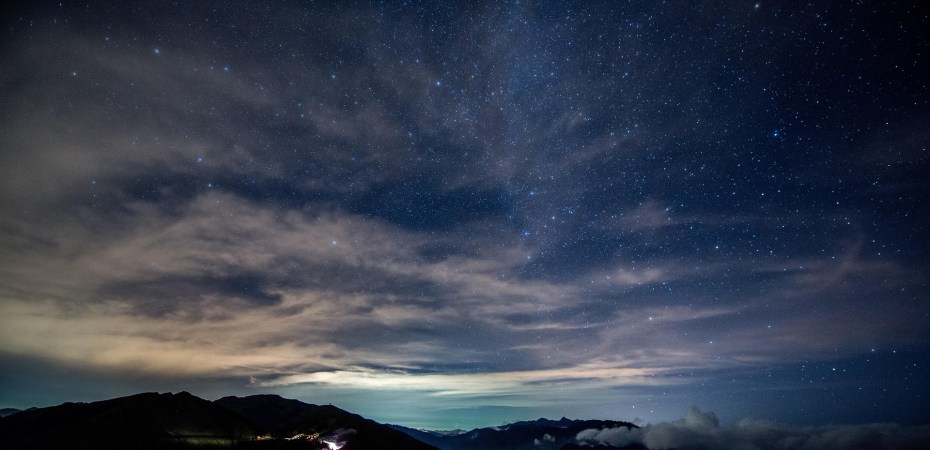
Allah now mentions more of His creation, such as the seven heavens. To the naked eye, the sky appears to be akin to “a roof” over our heads, with hues of blue, grey, yellow, pink and white during the day, and shades of dark blue and black at night. However, Allah says that there are seven skies above us, each one directly above the other (طِبَاقًۭا), with no crack, fissure, or imperfection visible anywhere.
Could that be more true? To say that the sky of our earth (ٱلسَّمَآءَ ٱلدُّنْيَا) is “picture-perfectly”, eye-poppingly magnificent to behold is an understatement! Star-studded, indeed.
No discrepancy in Allah’s Creation
The words فَطَرَ, فَطْرٌ and فُطُورٌ all have the same root, which means, to cleave, split, slit, rent, or crack. [Lane] We use a form of the same word to refer to the meal we consume to ‘break’ our fasts during Ramadan i.e. اِفطَار.
Allah challenges us to turn our sights again and again towards the skies to endeavor to find any imperfection, big or small, in His creation. He exhorts that our gaze will return to us, exhausted, at not being able to locate even one tiny semblance of error, discrepancy, imperfection, flaw, or shortcoming in Allah’s magnificent creative ‘design’ of the stars, constellations, galaxies and other celestial bodies in the universe.
The human gaze will be exhausted
When said in reference to the sight or gaze, the word خَسْءٌ and خُسُوْءٌ means “It was, or became, dazzled, or confused.” This is on point. A deep, focused study of the magnificent skies, whether done with the naked eye by lying under the stars at night (i.e. “star gazing”), or undertaken more deeply via a telescope or satellite, the human eye will be left overwhelmingly awestruck and enthralled by the stunning display of colorful stars and other celestial bodies that are scattered perfectly, without any hint of a fissure, discrepancy or imperfection, throughout the universes and galaxies created by Allah.
The other Arabic word used to describe the gaze of the human being, which returns to him after beholding the glitz and bewitching bedazzlement of the stars and galaxies, is حَسِيرٌۭ – which means “Tired, fatigued, or jaded by much travel”. [Lane]
A word based on the same root letters that is also used in the Urdu language is حسرت , which means regret, pining for something, or wistfulness.
Even the lowest sky is beautiful
وَلَقَدْ زَيَّنَّا ٱلسَّمَآءَ ٱلدُّنْيَا بِمَصَـٰبِيحَ وَجَعَلْنَـٰهَا رُجُومًا لِّلشَّيَـٰطِينِ ۖ وَأَعْتَدْنَا لَهُمْ عَذَابَ ٱلسَّعِيرِ ٥
And indeed, We adorned the lowest heaven with stars like lamps, and made them as missiles for stoning eavesdropping devils, for whom We have also prepared the torment of the Blaze. [5]
There is no doubt about the fact that advancements in science and technology have given us, the current, modern-era generation of human beings, a priceless gift that the people who lived on earth for centuries before us did not have. This “gift” is the ability to behold Allah’s beautiful creation of the stars and other spectacular celestial bodies in the galaxies that are located far beyond our own solar system.
People today are fortunate that they can look at the sparkling and stunning celestial bodies in the universe via high-definition imagery captured through telescopes, space-orbiting satellites and other cutting-edge technology.
That being said, Allah exhorts in verse 5 of Surah Al-Mulk above, that He has beautified even the lowest sky i.e. the one that is nearest to us in distance, which we can gaze at every night with our naked eye, with “lamps” (مَصاـبِيحَ). This Arabic word is the plural of مِصْبَاح – which also occurs in the famous verse of Surah Al-Noor (verse 24:35), — in the famous allegory describing the believer’s illuminated heart.
The word مِصْبَاح means a “lamp or lantern” in Arabic, and its plural here in Surah Al-Mulk refers to the stars and other constellations in the lowest sky that do indeed shine like lamps or ‘lanterns’ at night, when the sky is dark.
Meteorites prevent devils’ ascent to the heavens
Allah then mentions another purpose of these ‘lamps’—that they act as ‘missiles’ that drive away (رُجُومًا) any eavesdropping devils. The meteors in the sky (commonly known as ‘shooting stars’, i.e. stars that are on the move) have this purpose.
وَعَن قتادةَ قَالَ: خلقَ اللهُ تَعَالَى هَذِه النجومَ لثلاثٍ جَعَلَهَا زِينَةً لِلسَّمَاءِ وَرُجُومًا لِلشَّيَاطِينِ وَعَلَامَاتٍ يُهْتَدَى بهَا
Qatadah رَضِيَ ٱللَهُ عَنْهُ said, “Allah Most High created these stars for three purposes: He made them an adornment for the sky, missiles for the devils, and signs that guide the way (of wayfarers)…” [Mishkat al-Masabih]
Note: there are 3 distinct scientific terms: meteor, meteoroid, and meteorite, each having a different meaning. But sometimes, Islamic scholars might use these interchangeably (because they are not scientists), so you should look up the correct term to check which one they meant when explaining the meanings of the science-related verses in the Qur’an.
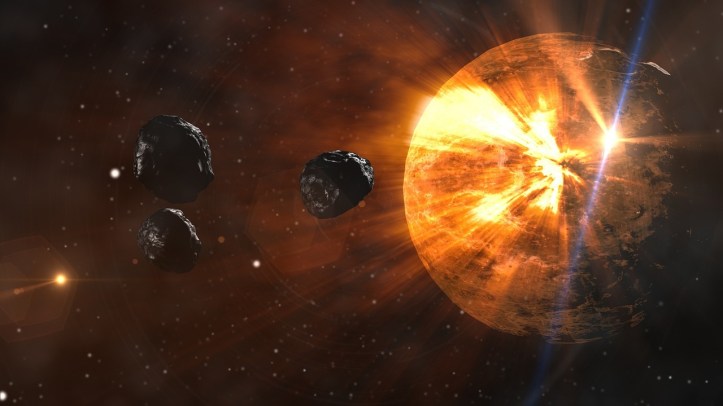
According to Tafsir Maududi: “This does not mean that the stars themselves are pelted at the Satans, nor that the meteorites shoot out only to drive away the Satans. But it means that the countless meteorites that originate from the stars and wander in space at tremendous speeds, and which also fall to the earth in a continuous shower, prevent the Satans of the earth from ascending to the heavens. Even if they try to ascend heavenward, these meteorites drive them away.” [Tafsir Maududi]
Verse number 5 of Surah Al-Mulk then ends on a sombre note: Allah says that He has prepared a punishment of burning for the devils who try to ascend to the heavens. Their being ‘pelted with meteors’ (رُجُومًۭا) is merely a preventive measure to drive them away.
Punishment for those who reject truth
وَلِلَّذِينَ كَفَرُوا۟ بِرَبِّهِمْ عَذَابُ جَهَنَّمَ ۖ وَبِئْسَ ٱلْمَصِيرُ ٦
إِذَآ أُلْقُوا۟ فِيهَا سَمِعُوا۟ لَهَا شَهِيقًا وَهِىَ تَفُورُ ٧
تَكَادُ تَمَيَّزُ مِنَ ٱلْغَيْظِ ۖ كُلَّمَآ أُلْقِىَ فِيهَا فَوْجٌ سَأَلَهُمْ خَزَنَتُهَآ أَلَمْ يَأْتِكُمْ نَذِيرٌ ٨
Those who disbelieve in their Lord will suffer the punishment of Hell. What an evil destination!
When they are tossed into it, they will hear its roaring as it boils over, almost bursting in fury.
Every time a group is cast into it, its keepers will ask them, “Did a warner not come to you?” [6-8]
After starting the surah with mention of the wonders of His perfect, blemish-free creation, Allah describes a horrifying scene from the Hereafter, in which those disbelievers who reject His message will be punished in the blazing Fire of Hell.
They will hear the ‘cry’ of the Hell-Fire
Allah describes how, when these disbelievers will be cast into Hell, they will hear—yes, hear, not just see and feel—the roar of its boiling. The fire of Hell is so gigantic and ferocious that it takes up the form of an all-engulfing entity, which makes such loud sounds that its inmates can hear it in action.
Imagine a predatory creature that chases its prey whilst making a terrifying sound that scares its prey into meek resignation of its fate long before it gets devoured by the predator in totality.
The two Arabic words used to describe this chilling scene of horror are شَهِيقًۭا and تَفُورُ. The former is a noun, and the latter is a verb.
Disbelievers will hear the شَهِيقٌ of the Hell-Fire, which means, “the ending, or final part, of the crying, or braying, of the donkey. The [sound of] weeping reiterated in the chest making the voice audible, naturally.” [Lane]
Hell-Fire will make this loud sound شَهِيقٌ while it is تَفُورُ i.e. it is boiling or raging. The verb فَارَ when referring to water means to boil, gush forth, well up, swell, overflow,flush out or engorge (something). This word also implies rushing about, congregating somewhere, or hurried commotion.
The word فَوْرٌ means the burning, or heat, and boiling of Hell, and the intensiveness or vehemence of heat. [Lane] In Urdu language, renditions of this word include فوَّاره for ‘fountain’ and فورًا for ‘quickly’.
The Hell-Fire will be in motion
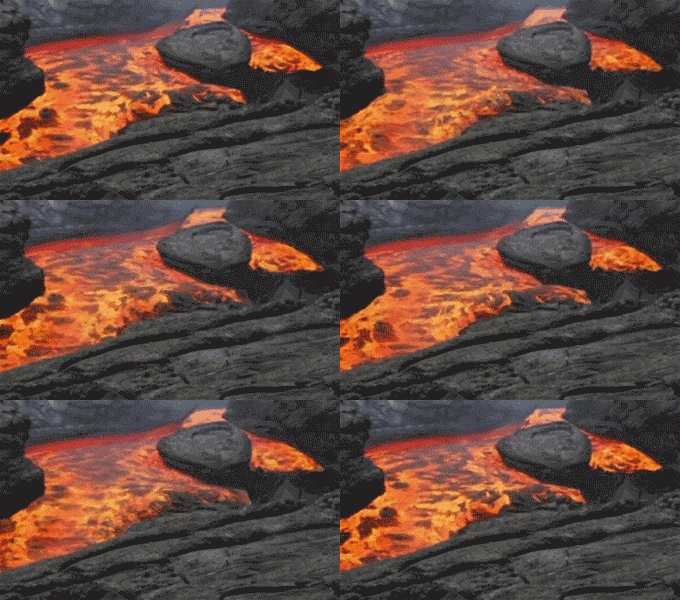
The Hell-Fire will be moving (هِىَ تَفُورُ)—swelling, gushing forth, boiling over, bursting at the seams (figuratively speaking), all the while being intensely hot, and making a loud sound akin to that of a gargling cry or the grating breath emanating from the chest of someone who is dying or in extreme pain, as if it is about to تَمَيَّزُ مِنَ ٱلْغَيْظِ — i.e. be rent asunder, or burst open, with fury.
The word تَمَيَّزُ means to be separated, removed from one place to another, or put aside. [Lane]
This shows that the Hell-Fire will have such fury (ٱلْغَيْظِ) that it will be ‘bursting open’ because of it. Its own fury will break it up into parts. Bring to mind columns of gigantic flames, flailing about in their force and fury.
Abu Hurairah رَضِيَ اللهُ عَنْهُ narrated that Allah’s Messenger ﷺ said, “The Hell Fire complained to its Lord, saying, ‘O my Lord! My different parts eat up each other.’ So, He allowed it to take two breaths, one in the winter and the other in summer, and this is the reason for the severe heat and the bitter cold that you find (in seasons).” [Sahih al-Bukhari]
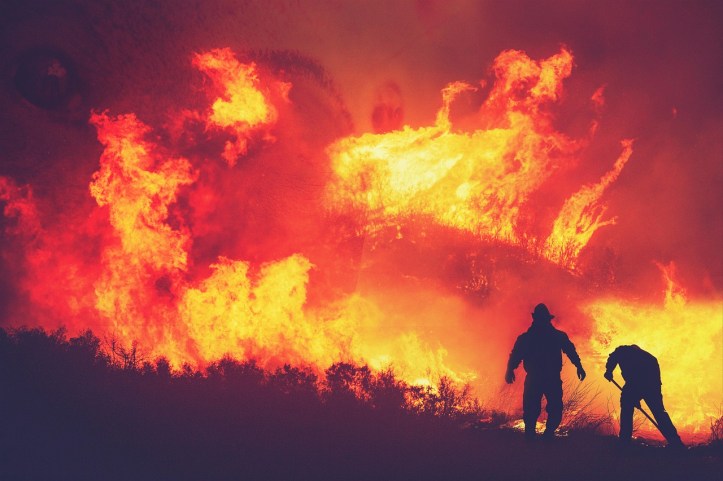
There is a reason why the term ‘raging fire’ is used, even in the English language.
If the all-consuming wildfires of this world that quickly spread across the horizon can ‘rage’ forward so terrifyingly and unstoppably, what can be said about the ultimate, unimaginably hot and intense, gargantuan blaze of Hell in the Hereafter?
A dialogue commences
Whenever a group of people will be cast into this intense blaze of Hell as a punishment for their disbelief, the keepers of Hell-Fire (angels) will ask them whether no warners came to them in their life (of this world), whom they could heed and thus be prevented from such a dismal fate?
The Arabic word خَزَنَة is the plural of خَازِن, which means keeper or guard/guardian. The guardians of the Hell-Fire will be angels appointed by Allah for this work, who have been described in another verse of the Qur’an (66:6) as — very stern and severe.
The فَوْجٌ of people being cast into the Hell-Fire by these angels will respond to the latter’s question, as described below:
قَالُوا۟ بَلَىٰ قَدْ جَآءَنَا نَذِيرٌۭ فَكَذَّبْنَا وَقُلْنَا مَا نَزَّلَ ٱللَّهُ مِن شَىْءٍ إِنْ أَنتُمْ إِلَّا فِى ضَلَـٰلٍۢ كَبِيرٍ ٩
وَقَالُوا۟ لَوْ كُنَّا نَسْمَعُ أَوْ نَعْقِلُ مَا كُنَّا فِىٓ أَصْحَـٰبِ ٱلسَّعِيرِ ١٠
فَٱعْتَرَفُوا۟ بِذَنۢبِهِمْ فَسُحْقًا لِّأَصْحَـٰبِ ٱلسَّعِيرِ ١١
They will reply, “Yes, a warner did come to us, but we denied and said, ‘Allah has revealed nothing. You are extremely astray.’”
And they will lament, “If only we had listened and reasoned, we would not be among the residents of the Blaze!”
And so they will confess their sins. So away with the residents of the Blaze! [9-11]
Those being cast into the Hell-Fire will express their regret and confess their sin of disbelief and rejection (فَكَذَّبْنَا) of the Divine guidance sent to them by their Creator in the form of Prophets (نَذِيرٌۭ).
They will confess that they told the Prophet who came to them that no, Allah has not revealed any message of guidance for them, and that they, in return, accused their Prophet of being misguided and astray from the right path!
Finally, they will express their ultimate remorse: had they only listened (to the Prophet) and used their intellect (نَعْقِلُ), they would not be cast into the Hell-Fire.
Once this confession of their sins has come forth, Allah will cast them into the Blaze. The Arabic word سُحْقًا is used as an expression here. ‘One says سُحْقًا لَهُ as a form of imprecation, meaning ‘May God alienate him, or estrange him, from good or prosperity! Or curse him!’ i.e. may he not be pitied with respect to that which has befallen him!’ [Lane]
In contrast, the believers will be in serenity
It is relieving and comforting to note that whenever Allah mentions (often hair-raising and terrifying) descriptions of the Divine punishment of disbelief in the Qur’an, He always, always accompanies it with a mention of the rewards that He will grant to people for believing in Him and doing good deeds.
That is what happens at this point in Surah Al-Mulk as well, as the second one-third (i.e. the middle portion) of this surah commences:
إِنَّ ٱلَّذِينَ يَخْشَوْنَ رَبَّهُم بِٱلْغَيْبِ لَهُم مَّغْفِرَةٌ وَأَجْرٌ كَبِيرٌ ١٢
وَأَسِرُّوا۟ قَوْلَكُمْ أَوِ ٱجْهَرُوا۟ بِهِۦٓ ۖ إِنَّهُۥ عَلِيمٌۢ بِذَاتِ ٱلصُّدُورِ ١٣
أَلَا يَعْلَمُ مَنْ خَلَقَ وَهُوَ ٱللَّطِيفُ ٱلْخَبِيرُ ١٤
Indeed, those in awe of their Lord without seeing Him will have forgiveness and a mighty reward.
Whether you speak secretly or openly—He surely knows best what is hidden in the hearts.
How could He not know His Own creation? For He alone is the Most Subtle, All-Aware. [11–14]
Note how Allah says ٱلَّذِينَ يَخْشَوْنَ رَبَّهُم بِٱلْغَيْبِ – ‘those who fear Him without seeing Him’ as a prerequisite for Him to grant them forgiveness and great rewards.
When a person fears Allah in solitude, i.e. when no one else among Allah’s creation can see them, they abstain from disobeying Allah, and this is a form of ‘fearing Allah without seeing Him’. Such a fear is proof of that person’s belief in an ‘Unseen’ God, Who (they believe, without a shadow of doubt) is watching them and recording their every action, everywhere, no matter where they might be.
It is this fear in Allah – without ever having seen Him – that also inspires a person to do good deeds in secret, when no other person around can see them; and to avoid committing a sin, even if they know that they will be able to get away with it, without any censure, loss, or punishment in this worldly life.
That is why, in the next two verses, Allah says that whether we publicly proclaim verbal statements or speak them all hush-hush, secretly, He will know it… because He even knows the secret thoughts and desires inside our chests (ٱلصُّدُورِ).
Would the One Who created us not be able to know (what is in our hearts)?
Allah has news of everything, no matter how minuscule or hidden away it might be.

More of Allah’s bounties & favors
هُوَ ٱلَّذِى جَعَلَ لَكُمُ ٱلْأَرْضَ ذَلُولًۭا فَٱمْشُوا۟ فِى مَنَاكِبِهَا وَكُلُوا۟ مِن رِّزْقِهِۦ ۖ وَإِلَيْهِ ٱلنُّشُورُ ١٥
He is the One Who smoothed out the earth for you, so move about in its regions and eat from His provisions. And to Him is the resurrection of all. [15]
Allah spread out the earth for us as a mercy, so that most of it looks and feels flat to us at ground level, even though it is spherical in shape as a planet.
The Arabic word ذَلُولًۭا means easy, tractable, submissive, or manageable (Lane), which Allah also uses to describe cattle in another verse of the Qur’an (36:72), to denote that He has created these animals solely for us to consume (i.e. to eat their meat, and to benefit from them in other ways, such as by using their milk, bones, hides, and fur).
Similarly, in this verse of Surah Al-Mulk, Allah says that He has made the earth ذَلُولًۭا for humankind, so that we are able move about easily on its paths (مَنَاكِبِ), and eat from the diverse provisions that it produces (كُلُوا۟ مِن رِّزْقِهِۦ).
Imagine if the earth was constantly shaking under our feet (as it does during earthquakes), or caving away into deep holes every few meters, or had prickly thorns or sharp splinters jutting out of it at every step, or if stones, embers, lava, or dangerous creatures popped out of it often, where ever we tried to tread upon it? How difficult it would have been for human beings to dwell peacefully upon the earth, had it not been made flat, still, hard, stable, smooth and subservient to our will, by our merciful Creator?
The earth abundantly sprouts forth most of whatever it is that we plant inside it and till, in addition to wildly growing produce, giving us its ample seasonal yields without any major problems, which last us throughout the year (and beyond).
That is also because Allah made it ذَلُولًۭا for us. So He tells us to فَٱمْشُوا۟ فِى مَنَاكِبِهَا i.e. walk in its ‘shoulders’ (such as its flat parts or bends) and eat from its produce.
ءَأَمِنتُم مَّن فِى ٱلسَّمَآءِ أَن يَخْسِفَ بِكُمُ ٱلْأَرْضَ فَإِذَا هِىَ تَمُورُ ١٦
أَمْ أَمِنتُم مَّن فِى ٱلسَّمَآءِ أَن يُرْسِلَ عَلَيْكُمْ حَاصِبًۭا ۖ فَسَتَعْلَمُونَ كَيْفَ نَذِيرِ ١٧
وَلَقَدْ كَذَّبَ ٱلَّذِينَ مِن قَبْلِهِمْ فَكَيْفَ كَانَ نَكِيرِ ١٨
Do you feel secure that the One Who is in heaven will not cause the earth to swallow you up as it quakes violently?
Or do you feel secure that the One Who is in heaven will not unleash upon you a storm of stones?
Only then would you know how serious My warning was!
And certainly those before them denied as well, then how severe was My response! [16–18]
After Allah reminds us that it is only He by Whose will the massive earth remains subservient to us human beings (by being still, flat, stable, treadable, and traversable, all the while seasonally producing nutritious vegetation for us), He then asks us a note worthy question—have we become too secure in the surety that He will not suddenly open up the earth from under our feet (without warning) and make it swallow us?
His next question is just as, if not more terrifying: have we become secure in our surety that Allah cannot send down upon us a rain of stones from the sky (that will destroy us)?
Bring to mind hurricanes, twisters, tornadoes, cyclones and other sky-based “natural disasters” that descend upon us from above our heads.
Allah then says فَسَتَعْلَمُونَ كَيْفَ نَذِيرِ — that it is during such calamities that human beings immediately remember/think of their one God and are convinced of His absolute power and control over everything.
Times of peace and prosperity, in which the earth and all the natural elements in the skies remain still and subservient to man’s will, are a special mercy and favor upon humankind from Allah.
But it is true that such times of well-being do make us too secure and heedless about Allah’s might and power. Being jolted by sudden “natural disasters” that shake us from under our feet or hail upon us from above our heads, causing destruction and havoc in our lives, do act as wake-up calls that Allah is in absolute power over us.
These 2 questions that Allah asks us here in Surah Al-Mulk are a bone-chilling warning for us that earthquakes, sinkholes, floods, tsunamis, hurricanes, typhoons, tornados and other “natural disasters”, which often wreak utter devastation, are actually warnings for us about Who is still in power and control over everything!
And yes, they can be considered His punishment for our sins. We should always bear that in mind, because Allah says right after asking us these 2 questions وَلَقَدْ كَذَّبَ ٱلَّذِينَ مِن قَبْلِهِمْ فَكَيْفَ كَانَ نَكِيرِ – and certainly those before them denied as well, then how severe was My response?— an apt correlation between the disbelief of bygone perished nations and the destruction that Allah sent upon them as punishment for it (in the form of an apparent “natural disaster” that wiped them out).
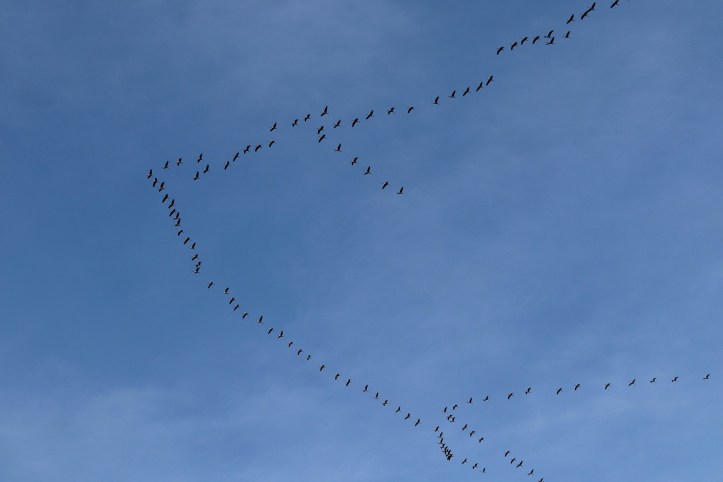
The birds in flight
أَوَلَمْ يَرَوْا۟ إِلَى ٱلطَّيْرِ فَوْقَهُمْ صَـٰٓفَّـٰتٍۢ وَيَقْبِضْنَ ۚ مَا يُمْسِكُهُنَّ إِلَّا ٱلرَّحْمَـٰنُ ۚ إِنَّهُۥ بِكُلِّ شَىْءٍۭ بَصِيرٌ ١٩
Have they not seen the birds above them, spreading and folding their wings? None holds them up except the Most Compassionate. Indeed, He is All-Seeing of everything. [19]
Allah then brings our attention to birds in flight, and exhorts that no one holds them up stably in the air except Him.
Did you ever wonder when the first time was, that a human being took flight in an airplane? It was in the beginning of the 20th century (year 1903). Before then, only hot air balloons had been used by humans for airborne travel.
This is closely linked to this verse of Surah Al-Mulk, which mentions how it is only Allah Who allows birds to fly high up in the sky using the coordinated motions of the flapping and spreading out of their wings (صَـٰٓفَّـٰتٍۢ). Studying this flying mechanism of birds using their wings and air currents has led to derivative, motion-based laws of physics, using which as a blueprint, human beings have successfully replicated it in airplane design to allow themselves to ‘fly’ thousands of feet high up in the air, literally ‘in the clouds’.
It is only by the mercy of Allah that the birds, – and, in lieu of studying their flying movements, now us human beings too – are able to fly in the air without falling and getting injured/dying.
In the birds, Allah gave us a dynamic, living, moving example (a “live demo”, as we call it) of how we humans could also learn to ‘fly’ from one place to another in an airborne vessel, all the while retaining full control of where we want to go, and all this is Allah’s special mercy and favor upon us.
Allah has bestowed this special favor only upon members of the human race who were born after the 20th century—yes, that’s us! We ergo owe it to Him to show special gratitude for being able to “fly” in the sky. Especially more so during the last 20 or 30 years, in which there has been a massive rise in aviation for globetrotting, which allows people to easily visit remote corners of the world in a very short span of time, which wasn’t possible merely a century ago.
At the end of the verse, Allah says إِنَّهُۥ بِكُلِّ شَىْءٍۭ بَصِيرٌ as if to remind us that He sees everything, much more than what the birds can see (with their “panoramic bird’s-eye view”) when they are in flight.
Have you stopped fearing Allah’s retribution?
أَمَّنْ هَـٰذَا ٱلَّذِى هُوَ جُندٌۭ لَّكُمْ يَنصُرُكُم مِّن دُونِ ٱلرَّحْمَـٰنِ ۚ إِنِ ٱلْكَـٰفِرُونَ إِلَّا فِى غُرُورٍ ٢٠
أَمَّنْ هَـٰذَا ٱلَّذِى يَرْزُقُكُمْ إِنْ أَمْسَكَ رِزْقَهُۥ ۚ بَل لَّجُّوا۟ فِى عُتُوٍّۢ وَنُفُورٍ ٢١
Also, which powerless force will come to your help instead of the Most Compassionate?
Indeed, the disbelievers are only lost in delusion.
Or who is it that will provide for you if He withholds His provision? In fact, they persist in arrogance and aversion to the truth. [20–21]
Allah now asks us who, or what groups of forces in our control (جُندٌۭ لَّكُمْ), can or will help us against Him, if He ever decides to destroy us? The disbelievers are deluded about standing any chance before Allah’s might and power, by ignoring, undermining, and rejecting His warnings.
Allah then asks us who will bring to us our provision if He decides to stop it from reaching us? Not only can Allah just wipe us out by using a destructive force (“natural disaster”), He can also withhold our provision (food and water) to make us eventually die of starvation.
Despite knowing this, and after being reminded of this harsh reality, those who reject Allah and His message continue in their arrogant defiance of truth –بَل لَّجُّوا۟ فِى عُتُوٍّۢ وَنُفُورٍ.
The word لَّجُّوا۟ means to persist in an affair, and refuse to turn from it, even if it became manifest that it was wrong. To persevere, or continue in opposition, in contention, litigation, or wrangling. [Lane]
The word عُتُوٍّۢ means: arrogance, haughtiness, tyranny, and the act of overstepping proper boundaries. The word embodies the concept of rebellion against divine guidance and the transgression of established limits. [Arabic123]
The word نُفُورٍ means: (referring to) a wild animal, a gazelle or other beast—it took fright, and fled, or ran away at random; or became refractory, and went away at random; or ran away, or broke loose, and went here and there by reason of its sprightliness. [Lane–edited for clarity]
A point to note here is that, very often, those who occupy positions of authority, guardianship and/or care-taking over dependents (such as children, the ill, elderly, or otherwise weak and unfortunate members of society) fall into similar arrogance in belief and attitude.
They begin to believe that it is they who “provide for” these dependents, and that, were they to decide to withhold their patronage, the latter would die of hunger, or end up alone and helpless out on the street. They also use this ruse to unleash oppression and injustice upon their dependents, forgetting Who is really in power and control over the provision, sustenance and well-being of not just their dependents, but of their own selves as well. This grave misbelief can become so so staunchly entrenched inside diseased hearts that its perpetrators do not even realize that they are committing the greatest sin of shirk i.e. associating partners or equals with Allah (which are, in this case, their own arrogant, narcissistic selves).
May Allah save us all from such misguidance. Amen.
أَفَمَن يَمْشِى مُكِبًّا عَلَىٰ وَجْهِهِۦٓ أَهْدَىٰٓ أَمَّن يَمْشِى سَوِيًّا عَلَىٰ صِرَٰطٍۢ مُّسْتَقِيمٍ ٢٢
Who is rightly guided? The one who crawls face-down, or the one who walks upright on the Straight Path? [22]
The believer who submits to and obeys Allah, walking upright and unswerving on the right path, can never be equal to the one who debases himself as a defiant disbeliever by crawling face-down in the mud, disgraced (in comparison).
There are ahadith (Prophetic narrations) that mention how the believers will be resurrected honorably on the Day of Judgement, standing/walking upright on their feet, whereas Allah will resurrect the disbelievers in a debased position, walking bent down or hunched over upon their faces in disgrace.
قُلْ هُوَ ٱلَّذِىٓ أَنشَأَكُمْ وَجَعَلَ لَكُمُ ٱلسَّمْعَ وَٱلْأَبْصَـٰرَ وَٱلْأَفْـِٔدَةَ ۖ قَلِيلًۭا مَّا تَشْكُرُونَ ٢٣
قُلْ هُوَ ٱلَّذِى ذَرَأَكُمْ فِى ٱلْأَرْضِ وَإِلَيْهِ تُحْشَرُونَ ٢٤
Say, O Prophet, “He is the One Who brought you into being and gave you hearing, sight, and intellect. Yet you hardly give any thanks.”
Also say, “He is the One Who has dispersed you all over the earth, and to Him you will all be gathered.” [23–24]
Allah then rightfully complains about how ungrateful mankind is, and how little they give thanks to Him, despite Him giving them the blessings of hearing, sight, and hearts (the latter has the ability to feel emotions and cultivate meaningful relationships with others, including with the Creator).
It is by using these 3 faculties of the intellect granted to us by Allah that we human beings are able to successfully thrive and honorably dwell upon the beautiful earth that Allah created for us. He mentions this in the next verse, how He spread out mankind all over the earth—having different races, countries, identities, customs, cultures and languages—and how it is to Him that they will all return.
It is true! How little we thank Him for all that He has given to us!
“When is the Hereafter?”
وَيَقُولُونَ مَتَىٰ هَـٰذَا ٱلْوَعْدُ إِن كُنتُمْ صَـٰدِقِينَ ٢٥
قُلْ إِنَّمَا ٱلْعِلْمُ عِندَ ٱللهِ وَإِنَّمَآ أَنَا۠ نَذِيرٌ مُّبِينٌ ٢٦
Still they ask the believers, “When will this threat come to pass, if what you say is true?”
Say (O Prophet), “That knowledge is with Allah alone, and I am only sent with a clear warning.” [25–26]
Instead of focusing on heeding Allah’s warnings, accepting the message brought by His Prophet, and submitting to His commands, the disbelievers just ask the Prophet ﷺ when will Allah’s promised Day of Resurrection (ٱلْوَعْدُ) occur? The Prophet is then commanded to proclaim that he is but just a warner, having no idea of the exact time when the Hour will be established.
فَلَمَّا رَأَوْهُ زُلْفَةً سِيٓـَٔتْ وُجُوهُ ٱلَّذِينَ كَفَرُوا۟ وَقِيلَ هَـٰذَا ٱلَّذِى كُنتُم بِهِۦ تَدَّعُونَ ٢٧
قُلْ أَرَءَيْتُمْ إِنْ أَهْلَكَنِىَ ٱللهُ وَمَن مَّعِىَ أَوْ رَحِمَنَا فَمَن يُجِيرُ ٱلْكَـٰفِرِينَ مِنْ عَذَابٍ أَلِيمٍ ٢٨
Then when they see the torment drawing near, the faces of the disbelievers will become gloomy, and it will be said to them, “This is what you claimed would never come!”
Say (O Prophet), “Consider this: whether Allah causes me and those with me to die, or shows us mercy, who will save the disbelievers from a painful punishment?” [27–28]
An apt response to the disbelievers when they demand to know when the Hour will be established, is to ask them in return, that who will save them, once they spot the Hour approaching and their faces become crestfallen?
The Prophet ﷺ is commanded to then say that whether Allah decides to eliminate him and the believers with him, or decides to show them mercy,— the question that remains is: who will save the disbelievers from Allah?
قُلْ هُوَ ٱلرَّحْمَـٰنُ ءَامَنَّا بِهِۦ وَعَلَيْهِ تَوَكَّلْنَا ۖ فَسَتَعْلَمُونَ مَنْ هُوَ فِى ضَلَـٰلٍۢ مُّبِينٍ ٢٩
قُلْ أَرَءَيْتُمْ إِنْ أَصْبَحَ مَآؤُكُمْ غَوْرًا فَمَن يَأْتِيكُم بِمَآءٍۢ مَّعِينٍ ٣٠
Say, “He is the Most Compassionate—in Him alone we believe, and in Him alone we trust. You will soon know who is clearly astray.”
Say, “Consider this: if your water were to sink into the earth, then who else could bring you flowing water?” [29–30]
The believers submit and obey their Creator, heeding His warnings and fearing His wrath. They focus on doing acts of worship and good deeds based on their belief, and put their full trust in Allah for deciding their eventual fate.
Everyone, including the antagonistic disbelievers who insist on worshiping other deities besides Allah, will one day see who was the one upon misguidance and error.
As they say, to each their own.
After directing at the defiant disbelievers this proclamation, Allah asks them one final question, as a culminating ‘challenge’ at the end of Surah Al-Mulk:
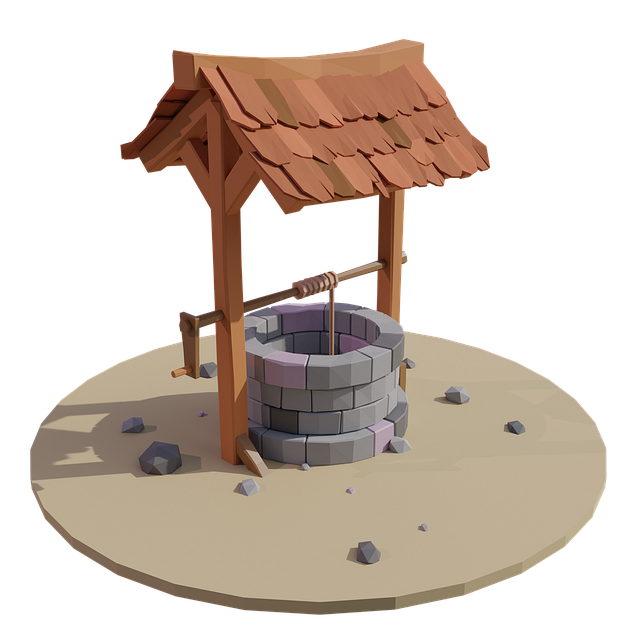
If the sweetwater that you drink (by extracting it from deep inside the earth, via wells) were to sink back down into the earth (and disappear), Who is it that can… or will ….. bring you this sweetwater (with which to survive)?
….Who?
Discover more from Sadaf’s Space: From Blog to Books
Subscribe to get the latest posts sent to your email.


The way this post breaks down Surah Al-Mulk makes its message easier to reflect on, especially the reminders about Allah’s power, provision, and our responsibility to learn His words. For families looking to study the Quran regularly, Online Quran Classes USA can also be a practical way to keep Quran learning part of the routine.