بِسْمِ اللهِ الرَّحْمٰنِ الرَّحِيْمِ
For a person who randomly picks up any of the books penned by children’s author Roald Dahl, something might immediately stand out within minutes of cursory flipping-through.
Many of the evil or negative characters in his short stories and novels (the antagonists of the main protagonist, to use industry jargon) are older, scary-looking, unpleasant, grumpy, borderline ugly, and cruel women.
The most famous one that comes to my mind is Miss Trunchbull in the book Matilda.
Bring to mind the story (spoilers ahead), which is infamous thanks to the now-iconic “Who’s in my house?” escape scene in the 1996 film Matilda (which was based on the novel), after watching which on cable television, a film-addicted family member commented to me, “This scene looks like something out of Halloween!”
The twist to this scene was that the alleged ‘intruder’ in Miss Trunchbull’s house was, in fact, its rightful owner! She was the intruder who had bulldozed her way in, and thereafter permanently squatted. From javelin-throwing, murdering siblings, locking up and force-feeding children, to grabbing little girls by their braids and throwing them up in the air, the ominous Miss Trunchbull did the most horrific things in the novel Matilda; things that would classify as crimes in the modern world.
Who can ever forget the horrific chocolate-cake-force-feeding torture scene in the novel? It has gone down in history.

Roald Dahl’s novel Matilda was published in the year 1988 (over 35 years ago). Like I said, as is the case with most famous fictional characters, over the past 3+ decades, the main antagonist in this novel, Miss Trunchbull and her characteristic meanness, have become timeless and (in)famous.
Antagonists in the form of ugly and cruel older women found in Roald Dahl’s books do make me wonder about his childhood. It seems to me as if he had several negative experiences with older women (probably his aunts or neighbors) during the early phase of his life; women who were especially harsh towards children, and this impression seems to have left a permanent mark on his psyche, and taken firm root in his mind, for life.
Interesting fact: Miss Trunchbull’s character was based on a real-life “Mrs Pratchett” whose bakery (then known as a ‘sweet shop‘) Roald Dahl used to frequent as a child in Llandaff, Cardiff (in Wales, UK).
Recorded in the Qur’an and Hadith: the story of the Prophet’s ﷺ cruel aunt
I cannot discuss characters of mean older women without recalling Surah Lahab a.k.a Surah Al-Masad, the 111th chapter in the Qur’an. Bring to mind that Allah loves odd numbers, and the sequential number of this surah of the Qur’an —111— is very unique. There are ahadith (Prophetic narrations) that shed further light upon its content and provide further details about the backdrop and repercussions of its revelation.
Surah Lahab mentions the torment that Allah has decreed for one of the Prophet’s ﷺ uncles and his wife. Her name was Umm Jamil bint Harb, the aged wife of the Prophet’s ﷺ uncle, Abu Lahab. She and her husband both staunchly opposed the Prophet in his work of spreading the message of Islam in Makkah, issuing him ominous threats and throwing obstacles in his path (even literally).
Allah revealed Surah Lahab/Al-Masad to counter their antagonism, once she and her husband Abu Lahab outright rejected the invitation of the Prophet to accept Islam, which he had formally extended towards them. They did not just reject it, they resolved to henceforth use their authority and clout in Makkah to stop him from spreading Islam.
Allah then revealed Surah Al-Masad:
تَبَّتْ يَدَآ أَبِى لَهَبٍۢ وَتَبَّ ١
مَآ أَغْنَىٰ عَنْهُ مَالُهُۥ وَمَا كَسَبَ ٢
سَيَصْلَىٰ نَارًۭا ذَاتَ لَهَبٍۢ ٣
وَٱمْرَأَتُهُۥ حَمَّالَةَ ٱلْحَطَبِ ٤
فِى جِيدِهَا حَبْلٌۭ مِّن مَّسَدٍۭ ٥
“May the hands of Abu Lahab perish, and he himself, perish! Neither his wealth nor worldly gains will benefit him. He will burn in a flaming Fire, and so will his wife, the carrier of kindling thorns. Around her neck will be a rope of palm-fiber.” [Qur’an: 111]
There are multiple suggested scholarly explanations for Allah’s torment described in the surah above. What does it mean that Abu Lahab’s wife will ‘carry thorns’? And why will there be a rope be around her neck, and when? Click or tap here to read these explanations.
Suffice to say, the graphic description of Umm Jamil’s punishment is akin to the state of convicted criminals who end up in prisons to be punished,— they are shackled in fetters (around their necks, wrists, and ankles) and made to carry heavy burdens i.e. engage in demeaning and taxing manual labor in prison, as a punishment for their crimes.
What crimes did Umm Jamil bint Harb commit? Read below:
اشْتَكَى النَّبِيُّ صلى الله عليه وسلم فَلَمْ يَقُمْ لَيْلَةً أَوْ لَيْلَتَيْنِ فَأَتَتْهُ امْرَأَةٌ فَقَالَتْ يَا مُحَمَّدُ مَا أُرَى شَيْطَانَكَ إِلاَّ قَدْ تَرَكَكَ، فَأَنْزَلَ اللَّهُ عَزَّ وَجَلَّ [وَالضُّحَى * وَاللَّيْلِ إِذَا سَجَى * مَا وَدَّعَكَ رَبُّكَ وَمَا قَلَى]
Narrated Jundub, “Once the Prophet ﷺ fell ill and did not offer the night prayer (Tahajjud) for a night or two. A woman (Umm Jamil bint Harb, the wife of his uncle, Abu Lahab) came to him and said, ‘O Muhammad ! I do not see but that your Devil has foresaken you!’
Then Allah revealed, ‘By the forenoon, and by the night when it darkens (or is still); Your Lord has not forsaken you, nor is He angry’ (i.e. Surah Al-Duha).”
Besides passing insulting, evil and blasphemous comments directly to her husband’s nephew’s face about the Divine revelation that he received from Archangel Gabriel, Umm Jamil defiantly came out to censure the Prophet (intending to even assault him physically) after Allah revealed Surah Al-Masad in response to her statements, and the word spread in Makkah about this 111th chapter of the Qur’an (and how it mentioned Allah’s punishment for her husband Abu Lahab and herself).
When she came looking for the Prophet ﷺ to berate and assault him, however, Allah protected him from her by sending His angels to shield him from her eyes.
A report has been narrated from Ibn ‘Abbas رَضِيَ ٱللَّٰهُ عَنْهُ, who said:
“When the words ‘Perish the two hands of Abu Lahab’ were revealed, the wife of Abu Lahab came when the Messenger of Allah ﷺ was sitting with Abu Bakr رَضِيَ ٱللَّٰهُ عَنْهُ.
Abu Bakr said to him, ‘Why do you not move out of her way so that she will not harm you, O Messenger of Allah?’
The Messenger of Allah ﷺ said, ‘There will be a barrier between me and her.’
She came and stood over Abu Bakr and said, ‘O Abu Bakr, your companion has lampooned us!’
Abu Bakr said, ‘No, by the Lord of this House, he has not spoken poetry and he does not utter verse.’
She said, ‘You are speaking the truth.’
When she went away, Abu Bakr said (to the Prophet), ‘Did she not see you?’
He said, ‘No, an angel was covering me until she went away.’”
In another report, there was a stone pestle there, and Umm Jamil had threatened Abu Bakr that had she found Muhammad ﷺ, she would have hit him on his mouth with it.
I now ask you: after reading the above verses of the Qur’an and the ahadith, what picture forms in your mind regarding the wife of Abu Lahab?
 Do you not envision a cruel, bitter and foulmouthed ‘old hag’, who is defiantly wicked and cruel to her innocent and righteous nephew-in-law— i.e. her husband’s brother’s son; an adult, independent man above age 40, just because the message that he started conveying to people contradicted and challenged her own personal beliefs and authority in society?
But that is precisely what she was.
Because of her evil actions, Allah made Umm Jamil bint Harb go down in history; to be negatively remembered (and cursed) via all the tongues that recite Allah’s word (i.e. the Qur’anl its 111th chapter), so that no one ever forgets—till the Day of Judgement—how Allah punished both she and her husband Abu Lahab for opposing, insulting, antagonizing, threatening and disrespecting His Prophet: the noble, honorable, pure-hearted and righteous Muhammad ﷺ.
Let all the Ayaan Hirsi Ali’s, Wafa Sultan’s, Maryam Namazie’s, the likes of (the now dead) Bridget Bardot, and other bitter, hate-mongering old hags female enemies of Prophet Muhammad take note: those women who openly insult the Prophet (through their verbal and written words), are headed towards a very severe punishment, which begins even in this worldly life!
Having to live in hiding for the rest of their lives, constantly looking over the shoulder, running from one country to another, fearing for their safety, …… is not even the tip of the iceberg ….. compared to what lies ahead for them (unless there is sincere repentance before demise).
Be warned.
Inspiration stemming from a child’s memories of real people
Imagine sitting in a room, talking to some people.
Imagine the words that are coming out of everyone’s mouths being recorded, and going down in history in the form of a rhetoric or dialogue, – penned or quoted – in a diary, article, a syndicated column, handwritten letter, opinion editorial (“oped”), short story, novella, novel, journal, periodical, tabloid, pamphlet or encyclopedia.
Archived …. somewhere in the deep trenches of history, able to be dug up by a curious mind, years, decades or even centuries down the road.
It is a little unnerving to note that those real people who were sitting at that moment in time, in that room, having that conversation, could perhaps never have imagined or foreseen that their words—perhaps spoken without thinking, or without much prior deliberation—would be recorded in time, and etched so firmly in history that, decades or even centuries later, people (who did not yet exist) would be reading them, analyzing them, deliberating over them, perhaps even spending long hours studying and trying to figure out their true context, and getting influenced by them so heavily, that it would change the way that those readers thereafter lived and interacted with others.
It is referred to as “history in the making”. Or “going down in history”.
Imagine that …. just for a second.
Now imagine a child observing you, perhaps a little unblinkingly and in deep awe, as you sit and talk with other adults. The child is totally taken in and transfixed by your persona, physical features, and verbal rhetoric.
Imagine that child growing up to become a writer, intellectual, historian, scholar, or academic, and creating a fictional character out of what he or she had observed about you that day during their childhood, when they were taking you in,— totally fixated and captivated, — as you animatedly talked about something with other adults.
Imagine that fictional character inheriting the physical or personality details that the child-writer borrowed from your real-life persona: maybe the way your hair was styled, how the muscles of your face twitched, the way you cleared your throat, the varying pitches of your voice, how you sat, how you moved your arms; the way your lips pursed up in anger, or the way your eyes moved while you spoke.
Now imagine that fictional character sticking. I mean, really sticking,—and I do not mean in the genre of academic literature or literary fiction, hidden behind thick book covers and under piles of paper.
I mean, in the psyche of the common masses.
So much so that, the name of that fictional character, along with its associated quirks and traits, became so generic, that it got passed down from generation to generation, and got associated with certain habits, antics or behaviors (whether negative or positive) that became identifiable among the laypeople and by the laypeople.
It is a little worth pondering upon, is it not?
But wait….. just think for a second!
Would you want such a character to be based upon you?
Words that connote a distinct meaning today, but stem from the name of a real person who existed years ago
We all know that there were people who lived centuries ago whose actions were so huge (in a good or a bad way) that they influenced not just the people of their time, but also those who came much later. They left behind a lasting legacy.
Sometimes, words or phrases based on their actions or names were added to an existing language, — that was how great their influence was.
Words such as Abrahamic, Draconian, Guru, Orwellian, Sadist, Socratic, Marxist, Hitler, Newton, diesel, nicotine, chauvinism, Freudian etc. refer to a legacy (good, bad, or debatable) that had its origins in the actions or ideologies of a single person.
It can be interesting to ponder upon which (and how many) living people today will one day also be remembered through their names (which would have become generic by then)—in the short future that is left of mankind …. before the final Reckoning (the Day of Judgement) is established?
What truly scares me is the long-lasting nature of some evil actions. Imagine someone committing the most heinous acts of transgression, injustice and oppression during their lives, only for them to become larger-than-life even after their deaths, leaving behind a legacy of demonic and doomish anti-social and inhuman cruelty that inspires other ‘psychos’ like themselves to commit similar or worse evil actions… even centuries down the road.
For example, the English word “sadist” is based on a deviant French ‘libertine’ (a too-nice label for someone who rejects morality) named Marquis De Sadé, an ‘evil genius’ writer who was born into wealth and nobility in the 18th century. He committed the worst kinds of crimes imaginable against weaker members of society, because of which the word ‘sadism’ was coined (based on his name), and exists in the dictionary today.
Marquis De Sadé was a prolific writer but, because of his extreme moral deviance, many of his writings were deliberately destroyed by his adult son once the former died (in a mental asylum). Nevertheless, many of the letters and other writings penned by this prolific ‘Devil-incarnate’ during his life were later published, and led to analyses and studies.
The case of Sadé makes it heart-rendingly obvious that some human beings are created as a trial (‘fitnah’) for mankind, and the morally deviant Sadé was one of them.
Indeed, when one recites the Qur’an, one cannot help but be inundated by Allah’s repeated reminders of the evil committed by bygone people and nations. He calls them out by name and mentions their sins and transgressions again and again, to drive home to us the lesson that evil actions have disastrous consequences (many times, on a large scale) both in this worldly life and in the Hereafter.
Allah mentions both, nations and individuals by name, to make sure that we do not forget what happened to them as a result of their flagrant disobedience of Allah and His Prophets. Some of these names are Pharaoh, Qarūn, Hamān, and Namrūd (and, of course, Abu Lahab and his wife!).
Perhaps, in His infinite wisdom, Allah allows the morbid fables and legends of the evil actions of other transgressive human beings among His creation also live on in history, as a horrifying lesson (ibrat) and a reminder for the generations that come after them, in addition to as a trial (fitnah) for the latter.
And Allah knows best.
Coincidental predictions or uncanny premonitions in fiction
Discussion on literary characters that leave their creepy mark would be incomplete without bringing up some that uncannily remind readers of real people.
Like I said, many fictional characters have been based, either partly or whole, on real people whom the author had come across personally in life. So, while history can make ‘larger than life’ villains and heroes out of real, flesh-and-blood bygone people, who are long dead and gone but ‘legendized’ over the centuries, so can fictional characters be created and weaved into compelling but ‘cooked up’ fictional stories, which are read and re-read over the forthcoming centuries.
What can feel as a little disconcerting is when a fictional character in a novel that you read reminds you eerily of a real person, or a category of real people who possess similar distinguishing character traits, whom you have come across in your own life.
That’s when a novel or work of fiction truly strikes a chord with you and makes you think.
Follows below is a list of such characters.
Bathsheba Everdene in Thomas Hardy’s Far from the Madding Crowd
I read Thomas Hardy’s book Far from the Madding Crowd because someone recommended it to me when I was a teenager. The main protagonist, Bathsehba Everdene, was a character that I instantly disliked, because of her vanity, shallow nature, and what I perceived as her totally immoral lack of character in dealing with potential suitors, all of whom were attracted to her mainly because of her beauty, wealth and social status. I was in high school at the time, and soon went on to enter university, both of which were, unfortunately, coeducational.
Unfortunately, I was disgusted to come across several people (spoilers ahead) who reminded me of the way Bathsheba Everdene treated the loyal and morally upright and dirt-poor shepherd, Gabriel: using, exploiting, and alternatively distancing him; but employing his services only as she pleased, based on her personal circumstances, the minute she needed his help. She thoroughly used him, time and again, just for her personal worldly benefit, not giving one owl’s hoot about the sincere feelings he harbored for her (which he had expressed to her in the form of a formal proposal of marriage, early in the story). Her foolish tryst with the philandering soldier Frank and her callously flirtatious but sick ‘jest’ with the widower Boldwood showed her complete lack of character and her evil desire to ‘play around’ with the feelings of her suitors, perhaps as a form of personal entertainment, or because it stroked her already inflated ego.
Time and again, I saw such “Bathsheba’s” in action in my high school and at university, and the disastrous results of their scandalous shenanigans with their respective Gabriels, Boldwoods, and Franks (formal engagements and even marriages ended, the grades and mental health of several young men went to the dogs, but were these characterless Bathsheba’s fazed? No. They just smirked about it, friend-zoned their down-and-depressed victims, and moved on to the next one standing in line).
Suffice to say, I heaved a huge sigh of relief when I reached that point in my life when I knew that I would never set foot inside a school, college or university again!
Mrs. Danvers in Daphne Du Maurier’s Rebecca
A creepy, soft-spoken spinster muttering cold, passive-aggressive taunts and barely veiled insults, walking the gigantic halls of a secluded, luxurious, sprawling estate named ‘Manderley’ lying in the middle of nowhere, with lavish furnishings and lush gardens surrounding it, all the while obsessively remembering the beautiful but inherently evil dead young woman who used to be ‘the lady’ who once owned (in every possible sense) this property: enter Mrs. Danvers of Daphne Du Maurrier’s novel Rebecca.

Mrs. Danvers (spoilers ahead) did everything she could, by using just her tongue, to manipulate the young and naïve “Mrs. de Winter”, the main protagonist of this Gothic novel and the new mistress of Manderley (the sprawling mansion-estate), into feeling bad about herself until she could take it no more and was cornered into wanting to flee from Manderley, — by death, divorce, or defection.
The creepy, non-confrontational and deceptive ‘Mrs. Danvers’ character has come to my mind often over the years, whenever I have had to endure the unfortunate occurrence of witnessing an insecure and territorial older woman resort to pathetically ‘playing dominion’ in her ‘territory’. Whether this territory is her home or her workspace; be it an office, a room, a tiny apartment, a bungalow, or a sprawling mansion, and whether it is a member of her household help, an office subordinate, a sibling, an adult offspring, a casual visitor, a guest who is staying over, or… the worst… a daughter-in-law,— it makes no difference.
“Mrs. Danvers” will stealthily follow her victim, “Mrs. de Winter”, all around her property, stalking her every movement, eavesdropping on her every conversation, listening to every footstep, cough, drawer-closing, or door-shutting; scanning her physical form from top to bottom every morning and evening to take in her dress sense (and, in lieu, her social status and level of spending), and forbidding her from moving anything from its place inside the entire ‘Manderley’.
When it comes to making sure that an ‘invading’ member of the female species who has set foot inside a geographical piece of ‘territory’ that happens to be her domain, a “Mrs. Danvers reincarnate” leaves no stone un-turned in using her tongue to make sure that this ‘alien’ female knows her inferior place in the sorry little domain of hers while she is present there, and eventually,….. has to leave it of her own free will.
And this Mrs. Danvers doesn’t need to have an obsession with a dead-and-gone ‘Rebecca’ to unleash her toxic behavior on any innocent ‘Mrs. de Winter’ who happens to inadvertently set foot inside her suffocating, gilded-cage-like ‘Manderley’!
Julia Wicket, the landlady in Mr Bean
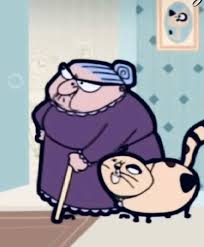
Not every victim of a mean old woman is female. Take Julia Wicket in the animated Mr. Bean, for example.
Make a slight noise when moving across her doorway or when she is asleep, and that’s it! Mr. Bean’s landlady, Julia Wicket, would be at her door within a second (or at his door, upstairs), with a large scowl on her face, walking-stick in hand, and her equally slinky, one-eyed pet cat in tow, glaring at him.
Whether it is a neighbor, a fellow traveler on a long journey, or a family member, you better not make any loud noise, even when moving about on tiptoe, when this person is napping, sleeping, or resting, unless you want to be glared at in a way that, if looks could kill, you’d be instantly dead ….. many times over!
The irony? The character of Mrs Julia Wicket snores very loudly when she naps or sleeps herself!
Strange Case of Dr. Jekyll & Mr. Hyde
Be it called an ‘alter-ego’, possession by a jinn, a mental condition known as ‘bipolar disorder’, or what was known in the 80’s and 90’s as ‘having a split personality’, the concept of having two extreme personalities found inside one human being has never been alien to the human race.
The work of fiction, a novella, titled “Strange Case of Dr. Jekyll & Mr. Hyde” was penned in the year 1886 by Robert Louis Stevenson. It is about a kind, London-based medical doctor who consumes a serum he has concocted that is intended to purge him of his suppressed evil desires, but this backfires. His evil alter-ego, Mr. Hyde, takes over his personality and goes around committing crimes in the city.
Suffice to say, it isn’t necessary for me to mention which real-life male person has reminded me repeatedly of the Dr. Jekyll-and-Mr. Hyde character over the last 2 decades!
Uriah Heep in Charles Dickens’ David Copperfield
Uriah is a fictional character and a villain in Charles Dickens’ novel David Copperfield, which was published in 1850.
“The name Uriah Heep has become a byword for a falsely humble hypocrite.” [Britannica Encyclopedia]
I was made to study an abridged version of David Copperfield in middle school for the subject of English Literature, when I was in the age range of 10—12. I found the Uriah Heep character oddly amusing and repulsive at the same time.
What was noteworthy about Uriah Heep was his ability to pretend to be innocent and humble, which he used to successfully convince people (especially his superiors at work) that he was exactly the opposite of his true, evil, cunning, and exploitative self.
No need for me to mention which real (male) person reminds me of Uriah Heep.
Ira Levin’s The Stepford Wives
The satirical horror novel The Stepford Wives was written and published in the year 1972, an era in time in which being a housewife— married to a successful, gainfully employed male— was the only way for a girl (located anywhere in the world) to lead a respectable and prosperous life (well-provided for, in a beautiful suburban house). This was the only way for a young woman to keep hunger, poverty and misfortune (including lonely spinsterhood) at bay, and more importantly, to stay off the streets to protect her honor.
Please note that this novel was written by a man named Ira Levin, who hailed from the upper crust of New York society at the time i.e. over half a century ago.
I cannot exactly remember when I first came across the derogatory label “Stepford Wife”, but it was thrown around online often, to describe submissive wives. Ever since I got married (of my own proactive choice) in 2004 i.e. after I became a wife, I could not help but be reminded of the themes of this novel, time and again, and the cultish, cliquey, cookie-cutter housewives that are described in it, whenever I came across groups of housewives in Pakistani society (a society from which I hail, by ethnicity and birth).
My thoughts about the novel The Stepford Wives became even more frequent during my thirties, as I advanced in age and gained more knowledge of the Qur’an. You see, Islamic history is replete with examples of brave, honorable and chaste women with lofty morals and principles, who took bold and unapologetic stands against the repressive and unjust societal and political shackles that were prevalent in their time.
All these real-life examples of married women from the Qur’an and sunnah categorically contradicted the kind of wimpish subordination that I observed being rampant in local ‘housewife culture’.
I noticed that the misogynistic culture and ethos upon which the Pakistani marriage system is based (irrespective of religious faith) brainwashes young girls and wives to do just the opposite i.e. to tolerate abuse, neglect, discrimination and injustice in the name of patience (sabr) and respect towards family elders (adab), because doing this is allegedly not just the trademark of ‘good women’ (wives), but also their supposed ticket to a secure future ahead, as authoritative and respected ‘society begums’, who will one day finally be able to have their own way (even if with defiance and brute force) to pounce upon and exploit their own young victims in their extended families, once they have passed a certain age.
Granted, the housewives of the fictional suburban small-town Stepford were (spoilers ahead) pre-programmed to be submissive and compliant because of the microchips surgically inserted inside their brains by their husbands at the men’s club, this horror novel doesn’t stretch reality too far.
In my experience, most women of South Asia have been successfully brainwashed by their mahrum men, society elders, and even the religious clergy, to restrict themselves to just household chores after marriage, for the rest of their lives, and to deludedly convince themselves to accept that this is all that they are capable of, … and nothing more worthwhile.
And, just like the main protagonist of the novel The Stepford Wives (named Joanna), any dissenting housewife who realizes the truth, raises the alarm, and tries to flee from these cultural shackles, is promptly chased, cornered, coerced and forcibly subjugated into compliance, with threats of divorce, honor killing, or being permanently ousted from the tribe (baradari) hanging ominously over their heads if they do not comply.
This is because keeping women away from all societal spheres except the home and family ensures that they are easier to dupe and control by men. In addition, keeping their interests ‘restricted’ to superficial, shallow, and ‘fluffy’ ones such as fashion (makeup), clothes, jewelry, cooking and home decor, ensures that they never enter the more serious and professionally meaningful fields of study or work that have been historically dominated by men, hence keeping the men in total power and control over them (in addition to turning these men into spoilt-rotten, cigar-puffing, well-fed couch potatoes, the overhang of whose paunches above struggling trouser-belts would make even a pregnant whale jealous!).
In contrast, when women gain a high level of knowledge in worthy fields, especially when this knowledge of theirs begins to exceed that which is possessed by the men in their familial and societal spheres, they become difficult to fool, brainwash, dupe, gaslight, control, and subjugate.
And that leaves the ‘power-wielding’ men frazzled and scrambling!
No matter how absurd the premise of the novel The Stepford Wives might be, I cannot help but marvel at how it seems to have hit the nail right on the head when it comes to satirically fictionalizing the intentional indoctrination and brainwashing of upper-crust, married, socialite women by the elitist-club-frequenting, male ‘power-players’ of affluent society.
Whether it is an Upper-East-side-penthouse-residing, Vanderbilt housewife attending a ladies power-luncheon at the Plaza Hotel in New York, or a DHA-phase-8-mansion-residing Hashwani housewife attending an imported-product-launch at the Karachi Golf Club, the underlying social dynamic is the same: glossy, cliquey, fluffy, shallow, fake, over-the-top and grandiose involvement of affluent women in trivial social pursuits that makes them feel good about themselves, all the while keeping them ‘out of their husbands’ hair’ and ensuring that they remain blissfully involved in the less serious matters of life, while the megalopolis lying just outside their picturesque little ‘society bubbles’ melts further into inhumanity, crime, injustice and chaos.
The lesson given by The Stepford Wives is: keep women trapped inside their domestic ‘little bubble’, so that even when it bursts, they remain indoctrinated, just like the surgically ‘dumbed down’ but picture-perfect homemakers obsessed with exchanging pudding recipes and rosebush pruning hacks in The Stepford Wives.
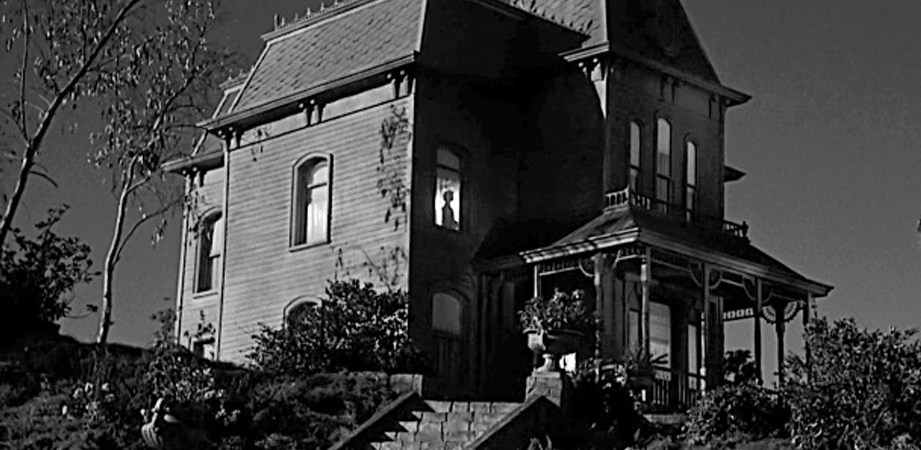
Mrs. Bates in Alfred Hitchcock’s Psycho

Robert Bloch’s 1959 novel Psycho is another Gothic novel that has become historic since it got published over 6 decades ago.
Psycho has two main protagonists who (spoilers ahead) are actually 2 personalities existing within the same person i.e. the reclusive bachelor Norman Bates and his deceased mother, Mrs. Bates, with whom he had an extremely toxic, codependent relationship.
In the novel Psycho, both the main characters of mother and son are depicted as being so insanely watchful and possessive of each other, that one of them flies into a murderous, jealous rage the minute the other gives attention to any member of the opposite gender.
The issue of bipolar disorder, jinn possession, alter egos, split personalities, and Dissociative Identity Disorder (DID) has been a regular feature in mental health circles for decades now, like I already mentioned. The same was the case with Norman Bates/Mrs. Bates in Psycho.
However, a layman will probably remain wondering and conjecturing about these concepts until they come across someone in their personal life who suffers from one of these afflictions, and then they witness,—with their own eyes and ears,—that afflicted person’s transformation from one state/personality to another.
It is quite a horrifying and disturbing spectacle to behold, truth be told, especially when the person switches back to their everyday demure and socially amicable persona after going through the spell of behaving like a monster-like, raving, villainous creature out for innocent blood!
The mother-son duo depicted in Psycho, living co-dependently in their isolated house on the outskirts of the city brings to my mind two real people who used to live like this. It sends shudders down my spine when I think about the eerie way that this piece of fiction has sometimes mirrored real life, and vice versa.
Another interesting fact: a criminally insane man named Ed Gein was a creepy serial killer who lived on an isolated farm less than 100 miles away from Robert Bloch, the author of Psycho. He, too, had an obsessive relationship with his controlling mother who forbade him from making any friends or going out anywhere. Both insane mother and son lived an isolated existence on this farm. After her death, Ed Gein went on to commit the most heinous crimes during the 1950’s. [Encyclopedia Britannica]
It was a coincidence that the main protagonist in Robert Bloch’s Psycho, Norman Bates, seemed to be based on or inspired by the real-life criminal,
Ed Gein.
Nevertheless, the uncanny semblance and morbid irony between fact and fiction is horrifying, to say the least.
Conclusion: real human lives turned into ‘stories’
وَجَعَلْنَـٰهُمْ أَحَادِيثَ
“And we reduced them to cautionary tales…” [Qur’an, 23:44]
Like I said at the start, people sitting together in real life, talking to each other.
A moment of carefree camaraderie captured in time, through the eyes of an innocent minor witnessing their conversation.
Gestures, facial expressions, voices, words, phrases, smells, sounds, and textures.. all taken in with a keenly observant eye, to be etched in an innocent memory for years to come.
Until one day, the (now adult) hand picks up a pen and decides to put vivid mental recollections to paper; or the fingers begin hitting the keys on a keyboard or on a screen. The brain becomes fully alert as it recalls the past event whilst the fingers pound, emotions stirred afresh, thoughts long-dormant kindled into a frenzy, producing words that will create lasting, impactful characters and spin a yarn around them that will, one day down the road, go on to influence other minds; minds that do not yet exist; but minds behind every pair of eyes that will one day take in those words and get affected by them in such a way that the thoughts running around inside them will change ….. for life.
And that is how, as Allah has mentioned in the Qur’an, legendized stories involving human beings and events will continue to be told, whether as news, history, memoirs, or fiction…..
….. with the ‘characters’ in them coming alive in the psyches of laymen, the common masses, and influencing their actions and decisions, and staying etched there…. until they breathe their last.
Discover more from Sadaf’s Space: From Blog to Books
Subscribe to get the latest posts sent to your email.

 Sadaf’s Space: From Blog to Books