بِسْمِ اللهِ الرَّحْمٰنِ الرَّحِيْمِ
One of the most oft-recited chapters of the Glorious Qur’an, Allah’s Divinely revealed writ and spoken word, is Surah Al-Muzzammil, the 73rd chapter (from a total of 114).
In meaning, the tile of this surah is similar to that of the surah that comes right after it, in juz number 28 of the Qur’an, i.e. Surah Al-Muddaththir.
The Arabic word ‘al-muzzammil’ means “the one who is wrapped up (in sheets of garments)”.
In Arabic, pronouncing the two ‘زز’ (which make the sound ‘zz’) in the word ٱلْمُزَّمِّلُ (with emphasis) is obligatory for a Muslim when reciting the Qur’an, which many non-Arabic-speaking Muslims are unaware of, and hence, routinely careless about. Many Pakistani’s even name their sons ‘Muzammil’,— with the emphasis on the ‘zz’ totally missing.
The backdrop of revelation
Surah Al-Muzzammil was revealed in Makkah, before the migration (hijrah), in which Allah commands Prophet Muhammad ﷺ to begin calling people to Islam openly.
The surah begins with Allah calling the Prophet “ٱلْمُزَّمِّلُ”, probably referring to how the Prophet ﷺ covered himself at night while asleep. Bring to mind that before he was granted Prophethood, Prophet Muhammad ﷺ used to live reclusively inside a cave in the mountain of Hira, which probably got very cold at night (if there was no fire), requiring him to cover up with sheets when he slept.
Surah Al-Muzzammil was revealed in two parts. According to Prophetic narrations (ahadith), its last verse (which is a long one, compared to the shorter ones at its start), was revealed more than a year after the revelation of the previous part of the surah.
This is important to keep in mind with regards to the practical implementation of the commands revealed in the first part of this surah, as witnessed in the actions of the Prophet and his companions just after its revelation, as I will try to explain further below.
But first things first.
Rampant false beliefs about the benefits of Surah Al-Muzzammil
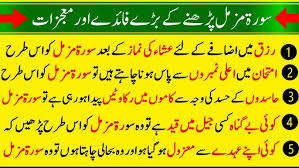
Before going on, I want to emphatically point out that many false beliefs are rampant among a lot of born Muslims (especially those who hail from Pakistan and India) about the so-called ‘benefits’ of reciting Surah Al-Muzzammil. These false beliefs have no basis in authentic Islamic scripture.
E.g. take a look at the alleged benefits of reciting this surah, listed in Urdu text, in the images that I have displayed above-right and below.
All of these alleged ‘benefits’ have no basis in Islamic Shari’ah.
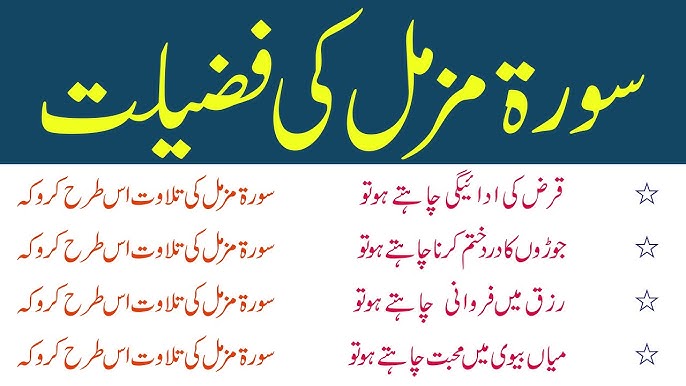
These listed purported ‘benefits’ cannot (and should not) therefore be touted as motivation or incentive for Muslims to recite this surah, because they are totally baseless.
Yes, reciting the Qur’an,— with the correct intention and in the right way,— is a noble act of worship that brings many rewards, blessings, and benefits, — even in this world. Nevertheless, proactively engaging in “offshoot” acts of worship that have no basis in Islamic scripture is bid’ah, which should be scrupulously avoided, because it makes a Muslim deviate from the true path (of the sunnah) that was shown to us by the Prophet.
Engaging in bid’ah — any innovated matter related to acts of worship that is publicly associated with Islam, but which has no basis in authentic Islamic scripture —eventually leads to the abandonment of the sunnah of the Prophet ﷺ. Note this warning.
That should be reason enough for us to shun it, instead of shrugging nonchalantly and asking, “But what’s the harm in doing it? Kia haraj hai ye karne main? It is the Qur’an, is it not?”.
Sadly, I have witnessed this deviation (swerving away from sunnah) happen with my own eyes, over the past 3 decades of my life, when it comes to the way many born Muslims carelessly and slapstick-ally (if not in a downright ignorance-based and disrespectful manner) ‘recite’ this beautiful surah (Al-Muzzammil) of the Qur’an.
For one, they do not even pronounce its title properly (like I have already said), skipping the emphasis on the ‘zz’ in its title. Second, they race through it very fast, totally jumbling up the noble words of Allah in their rush to ‘finish’ (“khatam”) reciting this surah a certain number of times, believing (falsely) that doing so will bring them the worldly benefits that they desire.
Most of the time, they do not understand even a single word or any of the meanings of the verses of this surah, which they are unjustly rushing through to ‘finish’ its requisite recitation, in their haste to “do business” with their Creator, Allah. Years pass with such an ignorant born Muslim reciting Surah Al-Muzzammil scores of times, totally incorrectly, without having any idea about the beautiful meanings of its verses.
I want to point out this grave matter as an open warning: please stop engaging in innovative acts of worship related to Surah Al-Muzzammil (….and even other parts of the Qur’an!).
Instead, ponder deeply upon the meaning of every verse of Surah Al-Muzzammil, try to memorize the surah in parts, then strive to recite it in your prayers (salah) as much as you can, — but do all of this calmly and with full focus upon the meanings of Allah’s beautiful words.
Do not rush through the Qur’an, whether you are reciting it in your prayers, or separately. Do full justice to Allah’s words, and show them immense respect. There is no rush.
By reading the full post below, insha’Allah, you will find out why I am stressing so much upon this.
Because it is in this very surah that Allah commands the Prophet to recite the Qur’an in a slow, measured manner!
Command from Allah: stand in seclusion for prayer at night
Soon after Allah granted Prophethood to Prophet Muhammad ﷺ, He sent down His command to him in the form of this surah, to now stand every night in devotional prayers (salah), because the dark ‘envelope’ of the still night offered complete quiet, seclusion, solitude, privacy, and a tranquil ‘haven’ away from the distractions of everyday worldly matters.
يَـٰٓأَيُّهَا ٱلْمُزَّمِّلُ ١
قُمِ ٱلَّيْلَ إِلَّا قَلِيلًۭا ٢
نِّصْفَهُۥٓ أَوِ ٱنقُصْ مِنْهُ قَلِيلًا ٣
أَوْ زِدْ عَلَيْهِ وَرَتِّلِ ٱلْقُرْءَانَ تَرْتِيلًا ٤
O you wrapped (in clothes)! Stand all night in prayer except a little—pray half the night, or a little less, or a little more—and recite the Quran properly, in a measured way. [1—4]
In the beginning 4 verses of this surah (above), Allah has even instructed Prophet Muhammad ﷺ about how much of the night i.e. what portion of it, to devote to his solitary prayers. He commands the Prophet to spend less of the night sleeping (قَلِيلًۭا), and to spent around half of the night, give or take a little (نِّصْفَهُۥٓ أَوِ ٱنقُصْ مِنْهُ قَلِيلًا أَوْ زِدْ عَلَيْهِ), reciting the Qur’an whilst standing in prayer (salah).
At the time that this surah was revealed, it was the beginning of the Makkan period of revelation, and not much of the Qur’an had been hitherto revealed to the Prophet.
Nevertheless, Allah now commanded the Prophet to stand up in prayers at night, and to recite the Qur’an in a slow, calm manner (وَرَتِّلِ ٱلْقُرْءَانَ تَرْتِيلًا) during these solitary prayers.
The word تَرْتِيلً is extremely important to understand, especially for non-Arabic-speaking Muslims.
This word تَرْتِيلٌ means, “He put together and arranged well the component parts of the speech, or saying, and made it distinct. Hence تَرْتِيلُ القُرْآنِ [explained in what follows]: he proceeded in a leisurely manner in the speech, or saying [making the utterance distinct] and put together and arranged well its component parts:” [Lane’s Lexicon]
When recited with تَرْتِيلٌ, each word of the Qur’an is pronounced calmly, distinctly and clearly, sans both exaggerated beautification and hasty rushing-through.
The common Muslim must not think, “Oh, but this command is for the Prophet only, not for a layman like me!” Actually, this command is for all of us Muslims, because the Prophet was our role model, and Allah has commanded us to follow and emulate him in every way that we can, but more so in acts of worship.
So,—even though night prayers are not obligatory upon us ‘laymen’ Muslims,—we should still endeavor and strive to pray them, and should do so in a manner that closely matches the way the Prophet performed these prayers.
The night prayer, “qiyam al layl”, or tahajjud, as it is more commonly known (وَمِنَ ٱلَّيْلِ فَتَهَجَّدْ بِهِۦ نَافِلَةًۭ لَّكَ), then became an obligatory act of worship for the Prophet.
This was because this night prayer was a necessity for him, now that he was embarking upon the mission of conveying the message of Allah to mankind. Daily, secluded night prayers would help him shoulder this new burden of responsibility.
It goes without saying, consequently, that any Muslim who wishes to tread the same path that the Prophets of Allah once tread viz. by taking on the responsibility of doing da’wah to mankind, must also strive to stand in secluded night prayers every night.
And, when intending to do this, they should bring to mind the core message of Surah Al-Muzzammil: start calmly when reciting memorized portions of the Qur’an in night prayers, take it slow and steady, and build it up over time. Our approach towards Qur’an recitation in night prayers should be “less is more”.
The question arises that, besides the obvious rewards that this act of worship garners for a believer, what other goals or objectives does it help to achieve?
Allah answers that question in the next verses, numbering 5—8:
إِنَّا سَنُلْقِى عَلَيْكَ قَوْلًۭا ثَقِيلًا ٥
إِنَّ نَاشِئَةَ ٱلَّيْلِ هِىَ أَشَدُّ وَطْـًۭٔا وَأَقْوَمُ قِيلًا ٦
إِنَّ لَكَ فِى ٱلنَّهَارِ سَبْحًۭا طَوِيلًۭا ٧
وَٱذْكُرِ ٱسْمَ رَبِّكَ وَتَبَتَّلْ إِلَيْهِ تَبْتِيلًۭا ٨
For We will soon send upon you a weighty revelation. Indeed, worship in the night is more impactful and suitable for recitation.
For during the day you are over-occupied with worldly duties. Always remember the Name of your Lord, and devote yourself to Him wholeheartedly. [5—8]
Allah explains that soon, the Prophet will receive a weighty revelation i.e. the rest of the Qur’an, sent down in parts over time. Indeed, the ‘weighty’ part is true! When the Prophet would receive the Divine revelation (wahyee), his forehead would break out in beads of sweat and his body would be physically weighed down with the burden of it, so much so that if he was riding an animal, the latter would move under duress.
The next reason for being commanded to stand in night prayers (نَاشِئَةَ ٱلَّيْلِ), besides the imminence of receiving Allah’s revelation, was that this standing in night prayer was أَشَدُّ وَطْـًۭٔا — stronger in treading upon the ground with both the feet, and أَقْوَمُ قِيلًا — more suitable for conducting/establishing verbal proclamations (which are, in this case, Qur’an recitation in privacy).
The word نَاشِئَةَ, the root-word of which I have explained in my previous blog post (which was about Surah Al-Waqi’ah), means ‘rising up’ or ‘elevating’, implying, the getting up of a person at night with the intention to pray.
Only the quiet night hours could afford an undisturbed block of time in which Prophet Muhammad ﷺ could stand firmly, un-moving, in one place and position, for extended minutes (leading up to hours), devotedly reciting the words of Allah, sans any breaks.
Lastly, Allah mentions how, during the day, the Prophet had سَبْحًۭا طَوِيلًۭا i.e. worldly matters to attend to. The Arabic word سَبْحً means, “The busying oneself in going to and fro, or seeking gain, and occupying oneself according to his own judgment or discretion, in the disposal or management of affairs, in respect of the means of subsistence.” Likewise, the Prophet’s worldly affairs during daylight hours required his interacting with people, and these distractions and preoccupations with the people were only about to increase once his forthcoming work as the Prophet of Allah would gain momentum.
This necessitated that he devoted a significant portion of the solitary and quiet seclusion afforded only by the wee hours of the night to worshiping Allah.
The instructions تَبَتَّلْ إِلَيْهِ تَبْتِيلًۭا mean, “cut yourself off towards Allah”.
The Arabic word بَتَلَ means to cut off, separate, or sever something.
In essence, the night-prayer ‘sessions’ of the Prophet were meant to afford him a ‘safe haven’; an everyday nightly ‘retreat’ spent in exclusive, uninterrupted, one-on-one, close communion with His Creator.
This reclusive nightly worship routine was meant to reassure, recharge and rejuvenate him spiritually, especially when (as Allah already knew) the going was about to get really tough for him, at the behest of his closest kin (i.e. his power-wielding tribal family members), the rest of his clan, and the city-dwellers of Makkah, whose growing opposition of and enmity towards his cause of propagating Islam would become a severe test of his resilience and patience—in the years immediately to come.
Turn away from enemies
As if on cue, because Allah knew what was going to happen to the Prophet in the coming decade (and even beyond), He goes on to mention His Greatness, encouraging the Prophet (and, in lieu, — us) to take just Him as a Trustee (وَكِيلً).
رَّبُّ ٱلْمَشْرِقِ وَٱلْمَغْرِبِ لَآ إِلَـٰهَ إِلَّا هُوَ فَٱتَّخِذْهُ وَكِيلًۭا ٩
وَٱصْبِرْ عَلَىٰ مَا يَقُولُونَ وَٱهْجُرْهُمْ هَجْرًۭا جَمِيلًۭا ١٠
Lord of the east and the west. There is no god worthy of worship except Him, so take Him alone as a Trustee of Affairs.
Be patient, O Prophet, with what they say, and depart from them courteously. [9—10]
Allah commands the Prophet to also be patient in response to whatever hurtful and vile things the people of Makkah were saying to him in their antagonistic opposition to his propagation of Allah’s message, and commanded him to retaliate to them just by politely turning away (هَجْرًۭا جَمِيلًۭا).
Allah then says that He will deal with the rejectors of His message:
وَذَرْنِى وَٱلْمُكَذِّبِينَ أُو۟لِى ٱلنَّعْمَةِ وَمَهِّلْهُمْ قَلِيلًا ١١
And leave to Me the deniers—the people of luxury—and bear with them for a little while. [11]
The words أُو۟لِى ٱلنَّعْمَةِ that Allah has suffixed, to describe the opulent rejectors of truth, send a chilling warning to anyone who is rich and powerful and denies the message of Allah, as if to imply that: ‘Go on,…. enjoy yourselves for a while more, …but Allah is after you, and will punish you soon’.
[*Shudder*]
Allah’s Punishment for those who reject His revelation
Allah proceeds to describe in graphic detail His punishment, in the Hereafter and after the Day of Judgement, which awaits those who die rejecting His message:
إِنَّ لَدَيْنَآ أَنكَالًۭا وَجَحِيمًۭا ١٢
وَطَعَامًۭا ذَا غُصَّةٍۢ وَعَذَابًا أَلِيمًۭا ١٣
يَوْمَ تَرْجُفُ ٱلْأَرْضُ وَٱلْجِبَالُ وَكَانَتِ ٱلْجِبَالُ كَثِيبًۭا مَّهِيلًا ١٤
إِنَّآ أَرْسَلْنَآ إِلَيْكُمْ رَسُولًۭا شَـٰهِدًا عَلَيْكُمْ كَمَآ أَرْسَلْنَآ إِلَىٰ فِرْعَوْنَ رَسُولًۭا ١٥
فَعَصَىٰ فِرْعَوْنُ ٱلرَّسُولَ فَأَخَذْنَـٰهُ أَخْذًۭا وَبِيلًۭا ١٦
For We certainly have shackles, a raging Fire, choking food, and a painful punishment in store for them on the Day the earth and mountains will shake violently, and mountains will be reduced to dunes of shifting sand.
Indeed, We have sent to you a messenger as a witness over you, just as We sent a messenger to Pharaoh. But Pharaoh disobeyed the messenger, so We seized him with a stern grip. [12—16]
Even in this world, prisoners and convicts are tied in fetters, chains, and shackles. They are given measly food to eat, and are even beaten and humiliated by jail wardens to mete out bad treatment. Allah’s punishment in the Hereafter will be more severe: shackles, a raging fire to be burnt in, thorns for food, plus a rattling, earthquake-like shaking of the ground under the feet, which will even topple and disperse the mountains into piles of dust!
As an apt reminder, Allah then mentions the name of Pharaoh and how sternly he was punished for his rejection of Allah’s messenger i.e. Prophet Musa (عَلَيْهِ ٱلسَّلَامُ).
Day of Judgment
Allah warns us how the Day of Judgement will in itself be a severely hard phase for all of mankind, except for those whom He chooses to spare from its torment:
فَكَيْفَ تَتَّقُونَ إِن كَفَرْتُمْ يَوْمًۭا يَجْعَلُ ٱلْوِلْدَٰنَ شِيبًا ١٧
ٱلسَّمَآءُ مُنفَطِرٌۢ بِهِۦ ۚ كَانَ وَعْدُهُۥ مَفْعُولًا ١٨
إِنَّ هَـٰذِهِۦ تَذْكِرَةٌۭ ۖ فَمَن شَآءَ ٱتَّخَذَ إِلَىٰ رَبِّهِۦ سَبِيلًا ١٩
If you pagans persist in disbelief, then how will you guard yourselves against the horrors of a Day which will turn children’s hair grey? It will even cause the sky to split apart.
His promise of judgment must be fulfilled. Surely this is a reminder. So let whoever wills take the Right Way to their Lord. [17—19]
The Day of Judgment will drag on and on for so long that a child’s hair will turn grey, with the skies splitting horrifyingly before the eyes of mankind.
Recite what is easy of the Qur’an (in prayer)
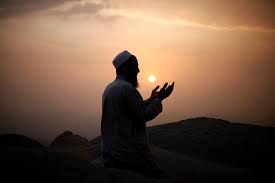
The concluding verse, number 20, of Surah Al-Muzzammil was revealed more than a year after the first 19 were revealed, and it is a longer one.
By this time, the companions of the Prophet had already put into practice the commands of the first 19 verses, and were performing long night-prayers every night, even if this caused them considerable hardship, such as swelling of their feet.
In a long hadith recorded in Sunan Abu Dawood, Aishah رَضِيَ ٱللَّٰهُ عَنْهَا the wife of Allah’s messenger ﷺ narrated:
فَإِنَّ أَوَّلَ هَذِهِ السُّورَةِ نَزَلَتْ، فَقَامَ أَصْحَابُ رَسُولِ اللَّهِ صلى الله عليه وسلم حَتَّى انْتَفَخَتْ أَقْدَامُهُمْ، وَحُبِسَ خَاتِمَتُهَا فِي السَّمَاءِ اثْنَىْ عَشَرَ شَهْرًا، ثُمَّ نَزَلَ آخِرُهَا فَصَارَ قِيَامُ اللَّيْلِ تَطَوُّعًا بَعْدَ فَرِيضَةٍ
“When the first parts of this Surah was revealed, the Companions stood praying (most of the night) until their feet swelled, and the concluding part was not revealed from heaven for twelve months. At last, the concluding part was revealed and the prayer at night became voluntary after it had been made obligatory.”
This proves that Allah revealed the concluding verse number 20 of Surah Al-Muzzammil as a form of His infinite mercy, to grant the laymen Muslims a concession and ease in night worship. Below is this last verse, with its translation:
إِنَّ رَبَّكَ يَعْلَمُ أَنَّكَ تَقُومُ أَدْنَىٰ مِن ثُلُثَىِ ٱلَّيْلِ وَنِصْفَهُۥ وَثُلُثَهُۥ وَطَآئِفَةٌۭ مِّنَ ٱلَّذِينَ مَعَكَ ۚ وَٱللَّهُ يُقَدِّرُ ٱلَّيْلَ وَٱلنَّهَارَ ۚ عَلِمَ أَن لَّن تُحْصُوهُ فَتَابَ عَلَيْكُمْ ۖ فَٱقْرَءُوا۟ مَا تَيَسَّرَ مِنَ ٱلْقُرْءَانِ ۚ عَلِمَ أَن سَيَكُونُ مِنكُم مَّرْضَىٰ ۙ وَءَاخَرُونَ يَضْرِبُونَ فِى ٱلْأَرْضِ يَبْتَغُونَ مِن فَضْلِ ٱللَّهِ ۙ وَءَاخَرُونَ يُقَـٰتِلُونَ فِى سَبِيلِ ٱللَّهِ ۖ فَٱقْرَءُوا۟ مَا تَيَسَّرَ مِنْهُ ۚ وَأَقِيمُوا۟ ٱلصَّلَوٰةَ وَءَاتُوا۟ ٱلزَّكَوٰةَ وَأَقْرِضُوا۟ ٱللَّهَ قَرْضًا حَسَنًۭا ۚ وَمَا تُقَدِّمُوا۟ لِأَنفُسِكُم مِّنْ خَيْرٍۢ تَجِدُوهُ عِندَ ٱللَّهِ هُوَ خَيْرًۭا وَأَعْظَمَ أَجْرًۭا ۚ وَٱسْتَغْفِرُوا۟ ٱللَّهَ ۖ إِنَّ ٱللَّهَ غَفُورٌۭ رَّحِيمٌۢ ٢٠
Surely your Lord knows that you, O Prophet, stand in prayer for nearly two-thirds of the night, or sometimes half of it, or a third, as do some of those with you. Allah alone keeps a precise measure of the day and night.
He knows that you believers are unable to endure this, and has turned to you in mercy.
So recite in prayer whatever you easily can from the Qur’an.
He knows that some of you will be sick, some will be traveling throughout the land seeking Allah’s bounty, and some fighting in the cause of Allah.
So recite whatever you easily can from it.
And continue to perform regular prayers, pay alms-tax, and lend to Allah a good loan. Whatever good you send forth for yourselves, you will find it with Allah far better and more rewarding.
And seek Allah’s forgiveness. Surely Allah is All-Forgiving, Most Merciful. [20]
In this concluding verse, Allah in His infinite mercy mentions how He knows that we laypeople have our worldly affairs to go about during the day, which tire us out, and after performing which we need a good night’s rest.
Allah then compassionately mentions how some of us fall sick, at times; how others need to travel through the earth during the day, and how there are those who need to toil hard to fight battles i.e. soldiers, marksmen and warriors. All such people cannot, obviously, stand for long hours at night in supererogatory prayers.
So He turns to them in mercy and instructs them to stand in prayer at night in a way that is easy for them to do, reassuring them that whatever little they do of any righteous deed, will be recorded with Allah, and He will reward them for it.
He then concludes the surah beautifully by ordering us to seek His forgiveness, emphasizing that He is always All-Forgiving (for those who repent).
Conclusion: choose the sunnah over bid’ah (innovation)
As I said at the start, reciting the Qur’an in prayer, and also outside of prayer, is a noble act of worship that should be done without haste and rush; without disrespectfully jumbling up the words of Allah, and with full focus and attention upon the meanings of the verses of every Qur’anic Surah.
This — along with inspiring, encouraging, and commanding the Prophet (and, in lieu, us) to stand before his Creator at night in calm, firm-footed, secluded and devotional prayer— is the core takeaway message of Surah Al-Muzzammil.
Discover more from Sadaf’s Space: From Blog to Books
Subscribe to get the latest posts sent to your email.

 Sadaf’s Space: From Blog to Books