
بِسْمِ اللَّهِ الرَّحْمَنِ الرَّحِيم
There is no doubt about the fact that what a child absorbs during their early childhood years, stays and impacts them for life. When I wrote my earlier blog post about the books that impacted me as a teenager, I later realized that there were quite a few books that impacted me, perhaps even more greatly, during my childhood (preteen) years as well.
Hence, today, I plan on sharing my recollections and thoughts on those with you, insha’Allah.
As before, there will be two lists to discuss. The first list will be of those books that were …. you know…. meh. Meaning, even though I picked them up to read, and did try to get through them to the end, I couldn’t finish most of them off, because my interest in them was not sustained enough, or because some or all aspects of their stories totally turned me off. When I did manage to finish some of them off, it was only because of my proactive effort to do so, not sustained by any keen interest.
The second list comprises of those books that impacted me positively i.e. those that I liked so much that, utterly enamored with their stories (and illustrations), I read them again and again and again.
Now for the key question: why write about this topic at all? Why should I compile this list and share it with the world? What is the point?
As I have said before, I keep an eye on the book publishing industry. After all, I am an author, so yeah, .. duh. My hair has greyed as I witnessed the book publishing industry evolve, grow and change (and not necessarily for the better in every aspect). I have also observed children (mine and others’) growing up: including what (and how) they are reading, and what not.
It is eye-opening, to say the least.
My silent observations often take me down memory lane, and help me to connect the dots about the impact of childhood reading habits upon adult beliefs, actions, and thought.
It is very interesting to note how a child, once they are an adult, remembers some books and reading experiences so vividly, while they completely forget the others, as if they never even happened.
In light of these observations, I keenly observe the efforts of the international Muslim publishing industry. That is, the books that are written and published for, and many times by, Muslims (i.e. when the writers as well as the readers, both young or old, are intended to be Muslims).
With the onset and clearly increasing pervasiveness of AI (Artificial Intelligence) and its effects upon the minds and reading/writing habits of everyone around the world – primarily children – I want to share my personal experiences in order to make people (who are interested) understand how they can ensure that their children or students can develop reading habits that are healthy and immune to the detrimental effects of technology and all-pervasive software.
You see.. and I dislike this a little .. but now even more so with the advent of ChatGPT and AI more omnipresently in the picture: my writing output (or prolificness, if you might call it that) has, and with each passing year, is increasingly beginning to make skeptics (and my toxic and tenacious haters, who hover around me like the bothersome mosquitoes on a humid, summer Karachi night next to the mangroves in Korangi creek) question whether I write everything that I write (and then self-publish, as books) myself.
Meaning, they wonder if I use any software, AI aide, or ghost writers to help me achieve my output.
Whatever the truth is, does not really matter. Those who will doubt me or hate on me, will just continue doing that.
But I need to put this blog post out there, in order to help sincere and truthful people (especially Muslim parents) realize the long-lasting positive impact of keeping children away from screens during their childhoods, and instead, within healthy limits and in moderation, turning them towards the habit of reading good, clean, positive-lesson-imparting books.
You see, sadly, as children are getting more and more addicted to technological gadgets earlier and earlier in their lives, their brains are getting so detrimentally affected that they find it difficult if not impossible to read large blocks of text by the time they are teenagers (or even before that), be it print or digital text.
Now, instead, they choose to go for article and book “summaries” in order to shorten and ease their reading task. And who can overlook the rising popularity of podcasts and Audible,– tech tools that now enable the average lay-person to listen to an article or a book in its entirety without even reading a single word of it.
As a follower of the religion brought by a noble Messenger ﷺ of Allah who was completely unlettered, I accept and acknowledge that reading and writing is not the be-all and end-all of learning, seeking knowledge, or attaining holistic success in life.
It is also not for everyone, especially those who are not naturally endowed, e.g. those who have dyslexia.
However, no one can deny the truth behind the words, “The pen is mightier than the sword”.
If someone can easily read and write positive and persuasive material, in any language, but more so in the language that is globally dominant (English), there is no denying the fact that they hold a power and weapon in their hands that is profound, magnanimous, influential, and unique, to say the very least.
And it is imperative that, if Allah enables them to possess such a weapon, that they use it with integrity, moral responsibility, and a high level of Allah-consciousness.
I will now compile the 2 lists of books that I read during my childhood, i.e. before I reached age 13. I will start with those that I did not like, despite reading them, or trying to read them, perhaps multiples of times.
The Misses
A child is naturally curious. He or she will gravitate towards a printed book like bees to honey, especially if it has pictures (illustrations).
The impact of illustrations upon the imaginative mind of a child is immense. I have many illustrations from storybooks that I read (and re-read) during my childhood, literally imprinted in my memory to this day.
It was one or more of these illustrations that enabled me to locate some of the books that I had read during my childhood, but whose textual content, synopsis, or title I no longer remembered very well.
This applies especially to the most positively influential book of my childhood that is listed at the very end of this post.
Jack and the Beanstalk
My brother loved this book. Since it was just us 2 siblings (and Irish twins, at that), I ended up reading this book with him again and again, in addition to discussing and play-acting the different aspects of the story (especially the ogre).
 What I disliked about this story was the unbelievable aspects, such as the magic seeds, the sky-high beanstalk, and of course, the wicked ogre.
I did not understand how such a huge ogre could live in a dwelling so high up in the sky, which obviously had no hard floor.
How Jack was able to climb up the entire length of this sky-high beanstalk, using just his bare hands and feet, was another mystery.
Be he alive or be he dead
I’ll grind his bones to make my bread
Excuse me, but ..cannibalism? And that, too, in a children’s storybook?
So yeah….meh. Although this book took up a lot of my time and imaginative energies during my childhood, I would’ve given it a pass if I had the choice.
And if my brother had disliked it as much as I did.
Peter and Jane
No matter how much these hardbacks are touted as great ‘readers’ that effectively teach children how to read, content-wise, let’s face it: the mundane lives of Peter and Jane are just plain boring.
And that was my opinion over 3 decades ago, when I was a child.
 The illustrations in the hardbacks are too realistic. The font size is too big. The illustrations drew me to these ridiculously repetitive books again and again. But they alone could not keep me glued to them.
Please can I not read anymore about Peter and Jane?
Peter and Jane make me feel bored.
Peter and Jane are always so perfect. Their depicted lives are too privileged, predictable, and elitist.
I don’t like Peter and Jane.
Please make me stop reading about Peter and Jane.
I do not have many other books, so unfortunately, I keep coming back to Peter and Jane.
Can we move on to the next book that I didn’t like, and stop talking about Peter and Jane?
It is plain for everyone to see how irritated I was with the repetitive text inside these books. We had a few P&J hardbacks lying around the house, but if it wasn’t for their lifelike (clearly un-Islamic) illustrations that drew me to them, making me imagine an idyllic (probably the American-suburban) life in some far-off land that had luscious green trees and clean sandy beaches, I would not have picked up these books again.
Pass!
Gulliver’s Travels
Oh my. Just thinking about this story makes my upper lip curl into a sneer. What a chore it was, to be made to read an abridged version of this storybook at school! Yes, this story was included in the curriculum as a textbook at my primary school, for the English-language subject.
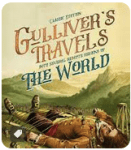 After being made to endure the agony of reading and studying this story in-depth, I remember looking closely at the ants running around on the school grounds during break and home time (end of the school day), wondering if, were they to suddenly transform into little human beings, would they be able to also tie me up and pin me to the ground, if I fell asleep?
Bleh!
Anne of Green Gables
The other girls at my school who liked reading books, would rave about this whole book series! Although I tried to read one of the books in the series (the pilot), I could not go past the first few pages. Similar to Louisa May Alcott’s Little Women, which I tried reading more than once a few years down the road, once again purely on the basis of other girls’ recommendations, I would pick up Anne of Green Gables again and again to try to read it, but just found it too boring.
The book failed to hook me, despite multiple attempts.
Nancy Drew
Once again, these were recommended to me many times by some other girls at school. Although I must admit that I did end up successfully reading one of these books (it did engage my attention enough to help me reach the end), I did not feel the desire to pick up another book from this series again.
 Please keep in mind that the cover art of these books always attracted my attention towards them, enough to make me want to read them (point to be noted by all authors of children’s books out there), but the textual content did not sustain my interest. Also, the one book from this series that I had read completely, had large, full-page, black & white illustrations inside. Perhaps that was the reason that I managed to finish it off, with some effort.
It is true that, as a child under the age of 12, illustrations made a big difference to my experience of reading any book.
Nevertheless, I found the character of Nancy to be just too perfect. She was too good to be true, basically. She always knew what to do, and how to do it.
And when she did it, she always did it right.
The Pied Piper
 I never understood the moral of this stupid story. Lol. Although I admit that I must have read a large-sized, illustrated hardback of it perhaps dozens of times.
All I could glean from this story was that we, as children, should never follow anyone who pipes up a tune on a flute.
And that perhaps some mountains are hollow from inside (cue Glenn A. Larson’s Airwolf rising up in the cavernous horizon).
The Emperor’s New Clothes
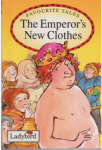 I seriously did not understand, as a child, how or why the lay-people around that arrogant emperor did not call the bluff on what their eyes could (or could not) clearly see. How could someone be so obsessed with what the people around them thought of them, that they refused to speak out the truth?
I guess I was a born-non-people-pleaser kind of human being all along. That child at the end of the story, who shouted out the truth about (the lack of) the emperor’s clothes in front of the whole crowd?
“The Emperor has nothing on!”
That child was so ME! 🙂
Thumbelina
As usual, I must have read this storybook (with the cover pictured) too many times to count. However, each time, I did not understand what the whole point of the story was.
 The part I really enjoyed was when Thumbelina would use half of a walnut shell as a boat to ride atop water streams (rivers, for her). I felt as if she must’ve had so much fun doing that! It changed the way I looked at walnut shells for quite a few months. I would try to float one half of a walnut shell on water, and begged my mother to find me a small doll the size of my thumb, which would fit inside it (…she couldn’t).
But, as the story progressed, I regarded it with distaste. I actually hated that fat, exploitative mole. I mean, as a child, I did not understand how a mole who lives under the ground could want to marry a human little girl? Was she not, like, just a child? And, as a mole, should he not be marrying another mole like himself?
Bleh.
Little Red Riding Hood & Cinderella
Okay, fact: this storybook, and Cinderella, were among the first storybooks that I ever remember reading as a child. Over the years, I read more than one rendition of these two stories. Both were in the form of illustrated hardbacks.
Little red riding hood…. what is she riding and what is a hood? How can a wolf get away with talking to her, as she is a human being? How can she behold a wolf’s paw and wonder why the hand of her ‘grandma’ is suddenly so hairy?
It made me wonder how the so-called “little red girl” could be so stupid?
As for Cinderella, it was just plain bonkers. A whole city-full of girls, and not a single other girl’s foot could fit into Cinderella’s shoe?
What was her shoe like …. contoured according to every little curve of her foot?
I just found these two storybooks too make-believe, fantastical and eye-roll-worthy to be taken seriously.
And, as a girl-child, I found the stupidity and objectification of the main female protagonists (a bit akin to Thumbelina) more than a little off-putting and derogatory.
Rumpelstiltskin
The only thing I remember liking about this story is the act of using a machine to spin a yarn. I used to wonder what straw or hay was, and how it could be used to spin up something like gold.
I remember wishing I could find a barn full of hay or straw somewhere, where I could watch someone spinning it up into a smooth yarn on such a machine that was pictured in the book.
The evil little old imp-man (titled) in the story, on the other hand, was just too repulsive to even deserving a passing mention.
But that is what he was: repulsive.
The Wizard of Oz & Alice in Wonderland
Groan. I never could understand the hype behind these 2 over-rated fantastical stories. I tried to endure my way through Alice in Wonderland more than once during my childhood, but never could finish it off, nor could I understand what the point of the story was?
As for The Wizard of Oz, the only character I liked was the amiable Tin-Man and the best thing I remember about the character of the main protagonist, Dorothy, was her pair of bright-red shoes (I recall them having some kind of power, or something of the sort). I recall that there was also a character based on a lion.
The rest of the story is just a (forgettable) blur. Even though I did watch a TV series on this story later on, as well.
[Ah, the lion. The most over-rated animal, in my opinion, which seems to be a favorite when it comes to conjuring up the main characters of children’s storybooks. Far from being the ‘king of the jungle’, I for one think that, personality and traits-wise, the lion is just a nice-looking but very lazy bum, who cannot even hunt prey for himself. All he can do is roar. And sleep. Yawn. More power to the selfless and majestic lioness, though. She is definitely the queen, who does all the worthy and credible work. Lol.😆]
***
Before I move on to listing those books that I absolutely loved and enjoyed reading during my childhood i.e. before hitting age 13, I want to highlight what a fallacy it is to introduce books based on ‘fairy tales’ to a little child who is just beginning to read.
Granted, some unknown and unseen experts of the literary world out there seem to have stamped these fantasy-based ‘fairy tales’ with the title of ‘classics’. But when a little child wonders, after reading them, what a fairy, ogre, godmother, magic wand, wizard, imp, pixie, witch, or other creature is, and goes up to the caretaker/guardian adults in their lives asking them these questions, those adults better have credible, believable and truthful answers ready.
To just smile and brush off these questions, or worse, ignore them as if they are not important, makes a child bewildered, confused, and a tad resentful. Here you are, letting your child read a book that has characters based on fantastical creatures that don’t even exist in real life, and yet, you do not have the time, wisdom, or patience to answer the child’s questions about them?
And telling the child, “Go ask your teacher at school” is not a good enough reply, in my opinion. It reeks of escapism.
As I grew just a little older, I did eventually figure out that this magic nonsense in fairy tales and children’s stories was just that: cooked up nonsense. Not real.
Nevertheless, it is no surprise that I kept all kinds of fairy-tale-based storybooks and novels far, far away from my own children when I was raising them.
And all praises to Allah for guiding me to do that!
The Hits
It is amazing, like I already said, whenever I go down memory lane, to observe and analyze just how great an impact any kind of reading material has upon a ‘bookworm’ kind of child. The kind of child who is naturally into reading and writing, the way I was.
Below, I will now list those books that I remember loving to read so much, that merely thinking about them now brings a smile to my lips.
Can you believe it? To this day, the experience of reading them warms me up.
The Adventures of Pip
This was my first hardback that was not a concise picture storybook. I remember receiving it as a prize for getting a position at school (i.e. for my academic grades).
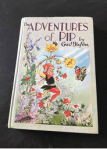 Back in those days, when a child came ‘first’, ‘second’ or ‘third’ in their ‘class’ (grades-wise), their names were announced in the morning ‘assembly’ on ‘result day’ (in front of the whole school) and they walked up to receive a prize for it, from the hands of the Principal herself.
So, yes, attending a primary school was responsible for introducing me to a book that led to my love of reading novels. So, see, despite me now being an unschooling parent, here I am, admitting that going to school does have its set of positives for a child. I never denied that. I just think that homeschooling a child is way better than sending them off to school.
But because I had received this book of short stories from school as a prize for my academic achievement (getting good grades in my exams), I felt like I owned this book; that it was my special possession. And this made me cherish it even more.
Nevertheless, my questions about what a pixie actually is in reality, met with the same dismissive smiles and indifferent responses from adults that I have mentioned above.
Also, one of the short stories inside, in which Pip the pixie wrangles with a gecko and its tail comes off in his hand, made me a bit aghast (thanks to my phobia of these house geckos! Ick!). I never looked at a tail-less gecko the same way again.
The Famous Five
 There was not a single book in this series that I did not like. I read most of them again and again.
You can perhaps see clearly that Ms Enid Blyton was a childhood favorite of mine. I just found her writing terribly easy and interesting to read.
And the content of her stories was, by and large, pretty digestible, clean and interesting too. She never let any part of the story drag or feel boring.
Children’s Picture Encyclopedia
When I used to visit my maternal grandparents’ house during the daytime in my childhood, everyone would retire for siesta right after lunch. The house would become absolutely quiet, and us children were expected to remain mum until everyone arose for their evening tea.
During this time, I would creep up the stairs in the house that led to the roof. On the landing, there were kept many chests and cartons, amid which lay something that was, for me, a bookworm’s “treasure”: a hardback children’s picture-encyclopedia. I had discovered it by chance, and never looked back.
It was full of pages upon pages of beneficial information illustrated with graphic pictures. Dinosaurs, undersea life, firemen and fire stations, trains, plans, farming & agriculture, all kinds of birds’ species …. you name it.
I can still remember what a joy it was for me to read it, sitting in a corner up on those stairs, all alone, devouring every word and every picture in that heavy hardback book!
The quietness of those long, summer afternoons well-spent.
Sadly, despite searching a lot for it online (using the memory of some of its illustrations that are still imprinted on my brain), I have not been able to locate that exact children’s picture-encyclopedia yet.
But because it was a very large and heavy hardback, and its cover was a plain green-gray color with no visible text on it, I am assuming that it was part of a whole set of encyclopedia hardback books.
The Twins at St. Clare’s & Malory Towers
 I absolutely loved these two series of books by Enid Blyton. I enjoyed the Malory Towers series of books a little more than the St. Clare’s series.
These books made me want to go enroll into a girls’ boarding school! The clandestine ‘midnight feast’ being a prime motivator.
Also, I really liked the brave and confident character of one of the main protagonists, Darrell Rivers.
The Adventures of Tintin
 In our childhood, we called these graphic novels ‘comicbooks’; ‘comics’ in short.
Thankfully, we had a nerdy boy in our neighborhood who possessed the entire Tintin collection, and he agreed to lend it to my brother, one book at a time.
Except for the two novels in the series in which Tintin goes to the moon, I loved every single graphic novel in this entire series, with my favorite being The Castafiore Emerald.
Twenty Thousand Leagues Under the Sea
 This book by Jules Verne engrossed me so much that I could just not put it down. I found it to be a true ‘page-turner’.
I remember loving to read every word of this intriguing book, all the while imagining being under the sea myself.
It was a thriller, and as time went on and I grew older, I became a bona fide fan of books that were categorized as thrillers, murder mysteries, and whodunits.
The Magic Paintbrush
I saved the best for last, though you might find it a bit of a surprise.
 This book, pictured on the left, is the one storybook that I read during my childhood that had perhaps the greatest impact upon me. You can watch and listen to it being read out loud on this YouTube video.
The reason for the immense impact of this book upon me is simple: its innate message resonated with my soul; with the born nature, natural inclinations, intrinsic habits, and innate tendencies that Allah had created me upon.
Of course, I did not believe in anything related to ‘magic’, but the message that I came away with every time that I read this book, and I read it dozens of times, was that – IF I ever discovered, ahead in my life, any natural gift or special talent that Allah had bestowed upon me as a special favor of His,– that I would use it for the betterment and benefit of other, needy, lesser-privileged, poor, and weak people around me. It taught me that I would not just think about myself, but of others around me, who needed that gift more than I did.
This book also taught me that, whilst helping the lesser fortunate people with my special gift, I would also make enemies along the way. These enemies would be greedy; they would want to steal my gift from me. And who, if they discovered that only I could use my gift for its special powers, would attempt to manipulate, exploit, torment, oppress, and even imprison me, just to boost their own power, wealth, benefit, and authority in the land.
The end of the story was also thought-provoking, a bit overwhelming, and eye-opening for me as a child.
What the little boy named Liang did at the end… I used to wonder if, were I ever in his position in real life, would I have the ingenuity and courage to do such a thing?
Would I? I do wonder …… now.
Especially after what I recently did. 🙂
Conclusion
It is obvious that Ladybird books and the author Enid Blyton played a great part in shaping my reading experiences during childhood, most probably because of the school (a private one named The City School) that I was enrolled in.
What I ended up reading was also influenced by the home environments of the girls whom I befriended, in my neighborhood and at school. Some of them had older sisters who were bookworms, and well, once a book was read by a girl, she lost interest in it pretty quickly, and was willing to have it passed around (lent) to not just her sisters, but to their friends as well.
Please don’t think that my parents bought all those books that I read during my childhood. They couldn’t afford original books. Most of whatever I read was either borrowed or cast off from friends, acquaintances, and neighbors, like I said. And before the famous Karachi Sunday Bazaar came into the picture, it thrived for quite a few years as a more modest, smaller-scaled Jummah Bazaar.
Thankfully, this open-air ‘flea market’ had many, many stalls selling used books and magazines, at much lower rates than original published material.
And although my father did try to get me access to a library during my childhood, seeing my great interest in reading books, there was a dearth of those back in the 80’s and 90’s.
To end this already long enough post, I would just like to make a shout-out to Muslim authors who are producing good, Shari’ah-compliant books for children around the world.
Please continue doing the good work that you are doing to promote a positive image of Islam and Muslims to diverse audiences of little children around the world.
Although, currently, I have no interest in writing children’s books, I wanted to write this blog post in order to show my appreciation of those children’s book-authors who are doing good work, and to highlight what a great impact illustrated children’s storybooks had upon me, as a child, back in the 1980’s.
“It is only with the heart that one can see clearly, for the most essential things are invisible to the eye.”
― Hans Christian Andersen, The Ugly Duckling
Discover more from Sadaf’s Space: From Blog to Books
Subscribe to get the latest posts sent to your email.

 Sadaf’s Space: From Blog to Books